Why Titusville is the County Seat (and not Cocoa or Melbourne)
Brevard's county seat moved from LaGrange (1855-1879) to Titusville (1879-present). The Cocoa-Rockledge area has tried to relocate it multiple times. Titusville's railroad connection in 1885 cemented its administrative role.
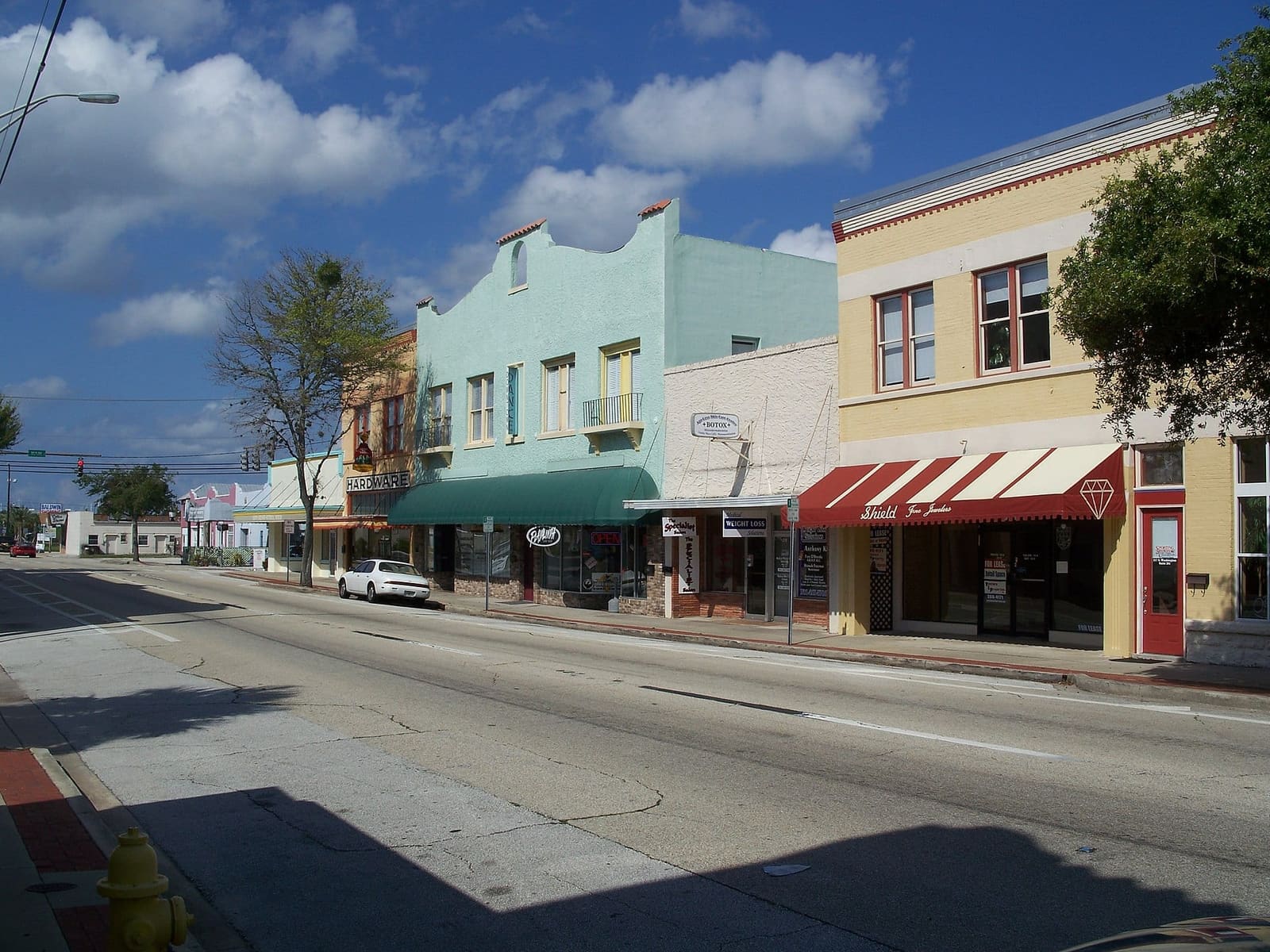
Brevard County’s seat has been in Titusville since 1879. That’s almost 150 years of continuous administrative location at the north end of the county, even as the population center has shifted south. The original 1855 county seat was at LaGrange, a Freedmen’s-era community near Mims; the move to Titusville in 1879 followed the construction of the first railroad serving Brevard. The Cocoa-Rockledge-Eau Gallie area has periodically pushed to relocate the seat closer to the population center and has consistently lost those fights.
The 1855 LaGrange seat
When Brevard County was created in 1857 (renaming the 1855 St. Lucie County), the legislature placed the county seat at LaGrange, a small Black settlement north of present-day Mims. The choice was geographic, LaGrange was approximately the geographic center of the original elongated county, which then stretched far south into what is now Indian River County.
The LaGrange courthouse was a small wood-frame building. The county records, such as they were in the 1860s and 1870s, fit in a couple of file cabinets and a vault. The county judge, sheriff, and clerk handled the modest caseload of a sparsely-populated rural county where most disputes were resolved informally or through Justice of the Peace courts.
LaGrange’s selection was always provisional. The town was not large, had no rail connection, and was awkwardly distant from both the lagoon-coast population centers and the western inland settlements. The post-Reconstruction Brevard population pattern was clearly shifting toward the lagoon-coast settlements that were growing as the citrus economy ramped up.
The 1879 move to Titusville
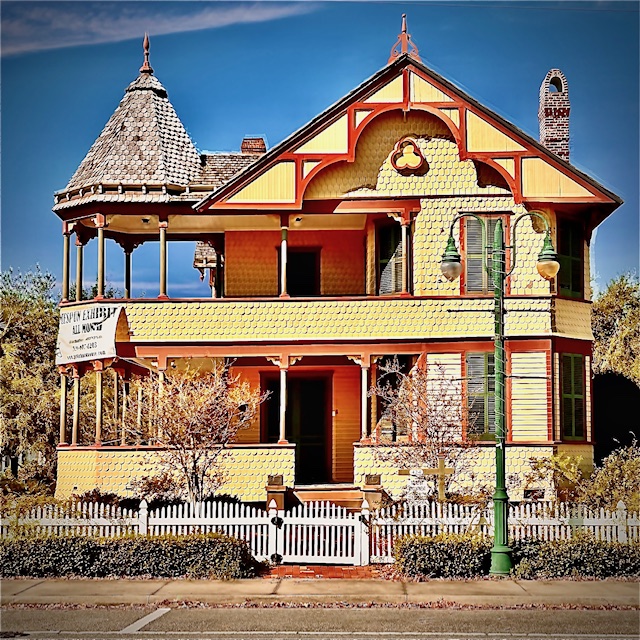
The Florida legislature relocated the Brevard County seat from LaGrange to Titusville by act on March 17, 1879. The vote followed several years of lobbying by Titusville interests, particularly the merchant class clustered around the Indian River steamboat docks and the Titusville waterfront.
Titusville had three specific advantages over LaGrange:
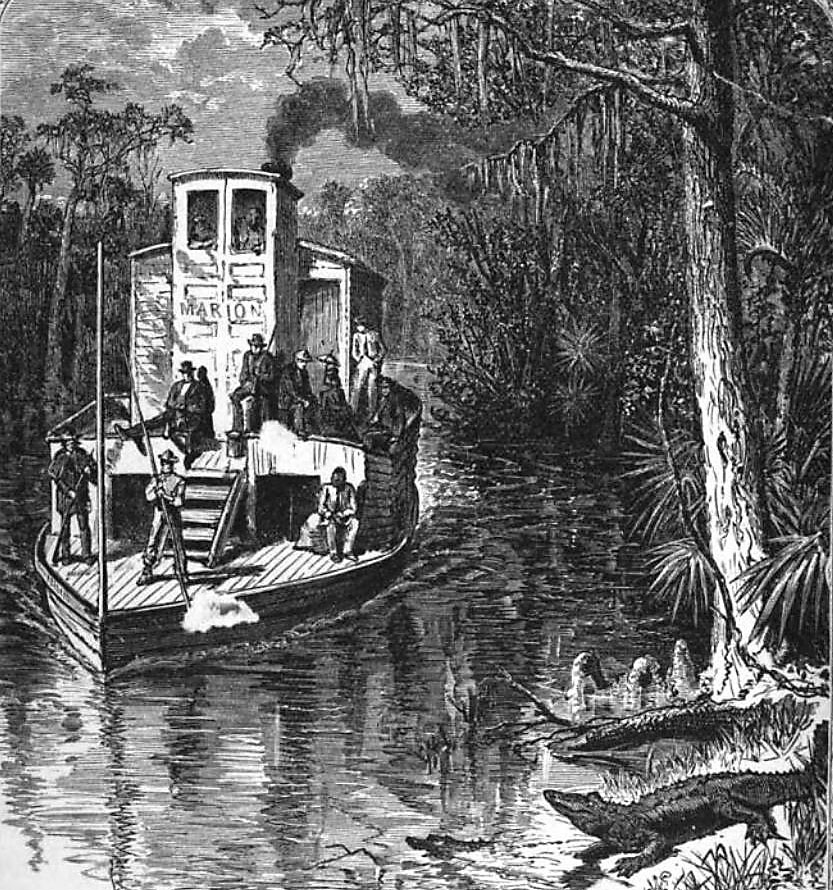
- Steamboat connection. Titusville was the head of the Indian River steamboat network. The town was the practical transportation hub for the entire lagoon coast.
- Anticipated rail connection. The Jacksonville, Tampa and Key West Railway (later absorbed by Henry Flagler’s Florida East Coast Railway) was extending south toward Titusville by 1879. The town was the obvious northern Brevard rail terminus.
- Growing commercial population. Titusville’s merchant class was politically organized and economically influential.
LaGrange had none of these. The rail connection materialized in 1885, six years after the county seat move. The steamboat connection persisted through the 1890s before the rail superseded it.
The new Titusville courthouse was built in 1881-82, a wood-frame two-story Italianate building that served the county for over four decades. The 1881 courthouse was replaced in 1925 with a brick Classical Revival building that still stands at 506 South Palm Avenue. The 1925 building was supplemented by additional county office space throughout the 20th century and remains the historical core of Brevard’s administrative complex.
The Cocoa-Rockledge challenges
The Cocoa-Rockledge area, which became the population center of Brevard by the early 1900s and remained so through the mid-20th century, mounted several attempts to relocate the county seat south. The major attempts:
1909. A petition signed by approximately 2,000 Brevard residents requested a county-seat referendum. The Florida legislature declined to authorize the referendum, citing the recent construction of the Titusville courthouse and the cost of relocating county records.
1925. Cocoa boosters renewed the campaign during the broader Florida land-bubble period. The Cocoa Chamber of Commerce funded a feasibility study proposing a new courthouse in Cocoa Village. The proposal was rejected by the Florida legislature, which had just approved funding for the new 1925 Titusville courthouse.
1948. A post-WWII attempt cited the growing Patrick Air Force Base presence and the projected aerospace development as reason to move the seat closer to the new economic center. The proposal failed at the county commission stage before reaching the legislature.
1965. An attempt during the Apollo build-out cited the proximity of Cocoa to the Kennedy Space Center as reason to move administration closer to the major county industry. The proposal was withdrawn after Brevard County opened satellite offices in Viera and Melbourne, providing administrative access for southern Brevard residents without relocating the formal seat.
The Viera satellite office, established in 1990 on a former cattle ranch, has gradually absorbed most of the day-to-day administrative functions that had previously required trips to Titusville. The 2024 county commission meeting schedule shows roughly 70 percent of business conducted at the Viera Government Center, with the Titusville complex retaining the courts, the clerk of court records, and the historical records archives.
Why Titusville has held the seat
The institutional inertia is the largest factor. Each county seat relocation requires Florida legislative action, which requires county commission support, which requires majority political will. The Titusville-area county commission seats consistently oppose relocation, and the rest of the commission has rarely had the bandwidth to push the issue against active resistance.
The financial cost of relocation is also substantial. Moving the courts, the clerk of court, the property appraiser, the tax collector, the supervisor of elections, the historical records, and the central administrative offices to a new location would cost tens of millions of dollars. The 1925 Titusville complex represents a sunk cost that periodic relocation discussions never quite override.
The Titusville business community has also been politically active in defending the seat. The town’s economy depends substantially on government employment and government-related commerce, court attorneys, title companies, government contractors, supporting services. Loss of the seat would be an economic blow to Titusville that the town’s local government and chamber actively lobby against.
The current administrative structure
Brevard County government operates from three primary facilities in 2026:
- Titusville Historic Courthouse (506 South Palm Avenue), the 1925 building, now housing the courts and the clerk of court records.
- Brevard County Government Complex / Titusville (additional administrative buildings near the historic courthouse), housing the supervisor of elections, property appraiser, and several other administrative offices.
- Brevard County Government Center / Viera (2725 Judge Fran Jamieson Way), opened 1990, housing the county commission, the county manager’s office, planning, public works, parks and recreation, and most of the day-to-day administrative functions.
The Viera complex is sometimes informally called “the de facto county seat” because that’s where the county commission meets and where most administrative business is conducted. But the formal seat designation, the courts, and the historical records remain in Titusville. The arrangement is a workable compromise that has held since 1990 with periodic minor adjustments.
What the seat history tells us
Brevard’s county seat geography is a case study in how administrative locations persist long after their original justifications dissolve. Titusville was selected in 1879 because it was the steamboat hub and the anticipated rail terminus. Both of those reasons evaporated by 1910 (steamboats) and by 1970 (the Titusville rail terminus is no longer particularly important to county economic activity). The seat persisted anyway, supported by sunk-cost arguments, by Titusville political organization, and by the absence of a single overwhelming alternative.
The same pattern plays out across Florida and across the US. County seats selected for 19th-century reasons frequently retain that status into the 21st century, even when the underlying logic has changed completely. Brevard is not unusual. What is unusual about Brevard is that the population center has shifted so dramatically (from Titusville-LaGrange in 1880 to the Cocoa-Rockledge area in 1920 to the Melbourne-Palm Bay area in 2000) that the seat-location mismatch is more pronounced than in counties with more stable population distributions.
The Viera Government Center is the practical compromise. The formal seat is in Titusville. The actual government center is in Viera. The dual location is administratively unusual but operationally functional, and that functionality is why the formal designation hasn’t moved.
Further Reading
As an Amazon Associate we earn from qualifying purchases.