Surfing History of the Space Coast
Cocoa Beach became the East Coast surf capital in the 1960s. Kelly Slater grew up surfing the Cocoa Beach Pier. The East Coast Surfing Championships have run since 1964.
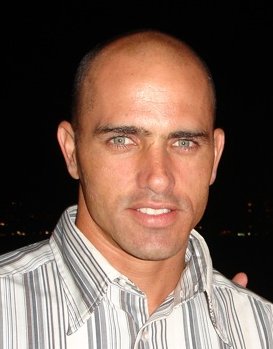
Cocoa Beach has called itself the East Coast surf capital since the 1960s. The claim is not exaggeration. Kelly Slater, the most successful competitive surfer in history with 11 world titles, grew up surfing the Cocoa Beach Pier. Several other major US competitive surfers trace their roots to the same stretch of beach. The East Coast Surfing Championships, founded in 1964, have run continuously since then.
The waves on the central Florida east coast are not large. Average surf at Cocoa Beach runs 1-3 feet most of the year, with occasional swells reaching 4-6 feet during winter cold fronts and hurricane season. What the area has instead is consistency, surfable conditions roughly 250-280 days a year, and access. The beaches are wide, public, sandy, and adjacent to one of the largest US population centers on the Atlantic coast.
Early Florida surfing
Surfing came to Florida in the 1930s and 1940s, mostly through individuals who had spent time in Hawaii or California. The earliest documented surfing on the Brevard coast was at Patrick Air Force Base beaches in the late 1940s, with military personnel who brought boards from West Coast assignments. The post-WWII boom in commercial board manufacturing made surfing more accessible, and by the late 1950s small but identifiable surf communities had formed at Cocoa Beach, Indialantic, and Melbourne Beach.
The 1959 release of the film Gidget and the broader surf-culture marketing of the early 1960s expanded Florida surfing rapidly. By 1962, Brevard had dozens of teenagers regularly surfing, with concentration around the Cocoa Beach Pier (built 1962, the same year the surf community was crystallizing).
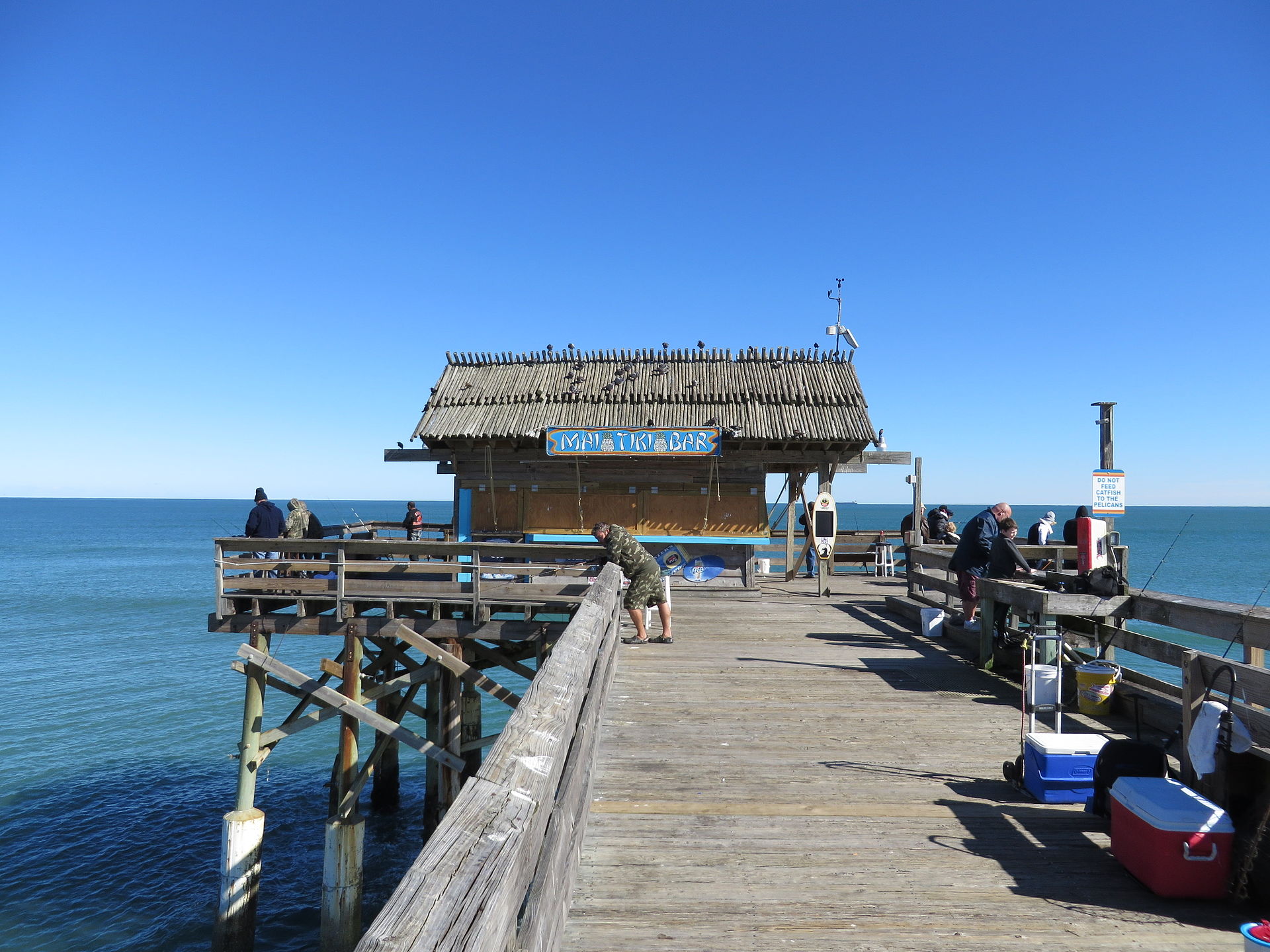
The Cocoa Beach Pier
The Cocoa Beach Pier opened in 1962 at the foot of Meade Avenue, replacing an earlier wooden fishing pier that had been damaged by Hurricane Donna in 1960. The new pier provided sheltered water on the south side and reliable wave conditions that quickly made it the central surf break for the region.
The Pier became the focal point of Brevard surf culture for the next sixty years. Local surf shops clustered around it. Competitions were held in the pier’s surf zone. The pier’s restaurant and bar became surf community gathering spots. The famous photographs of Kelly Slater as a teenager surfing the Pier in the 1980s are part of the regional surf identity.
Hurricane Frances (2004) and subsequent storms damaged the pier substantially. The structure was repeatedly repaired and partially rebuilt. The current pier is shorter than the original 1962 structure but remains the dominant Cocoa Beach surf venue.
The East Coast Surfing Championships
The East Coast Surfing Championships (ECSC) were established by the Eastern Surfing Association in 1964 to provide formal competition infrastructure for surfers along the Atlantic coast. The first ECSC was held in Virginia Beach. The championship rotated among East Coast surf venues through the 1960s-1980s, with Cocoa Beach hosting multiple times.
The ESA itself, founded in 1967 as a regional governing body, became the primary organization developing East Coast competitive surfing. By the 1980s the ESA had over 50,000 members across the Atlantic and Gulf coasts. The organization’s annual championships at locations including Cocoa Beach, Sebastian Inlet, and Wrightsville Beach drew hundreds of competitors and thousands of spectators.
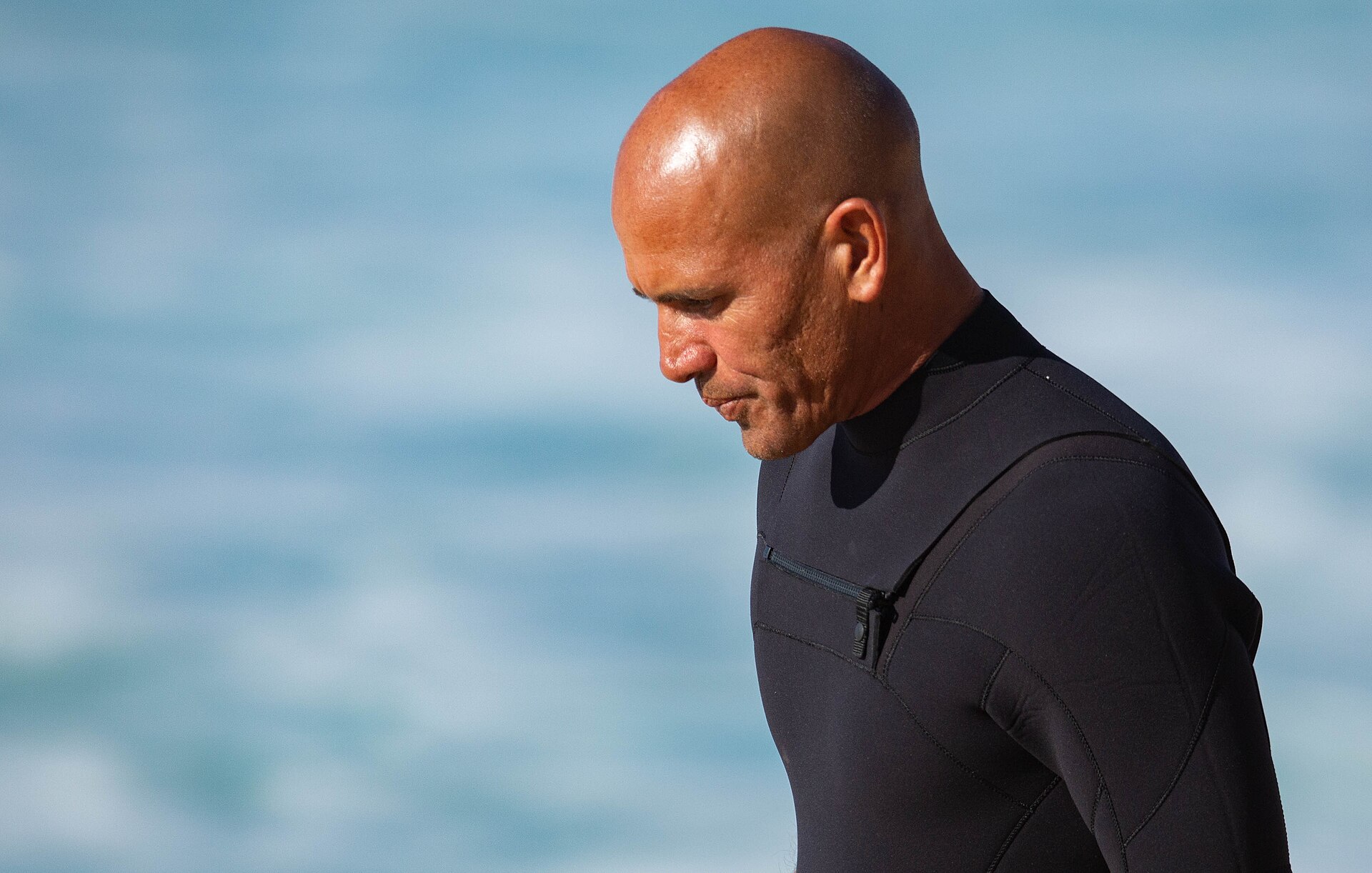
Kelly Slater
Robert Kelly Slater was born in Cocoa Beach on February 11, 1972. His father Steve Slater ran a bait-and-tackle shop in Cocoa Beach. Kelly and his older brother Sean both began surfing at the Cocoa Beach Pier in the late 1970s.
Slater turned professional in 1990 at age 18. He won his first ASP World Tour title in 1992 at age 20, at the time the youngest world champion in surfing history. He held the title through 1995, then won six more world titles between 1998 and 2011, plus a 2010 title that gave him a record 10 total.
Slater added an 11th title in 2011, a record that has stood since. His career win-loss record on the World Tour, his contribution to surfing technique (particularly aerial maneuvers), and his commercial influence (the Quiksilver brand, the Slater Designs surfboard line, the Surf Ranch wave pool in California) make him the most influential individual surfer of his generation and arguably the most successful in surfing history.
Slater maintains a home in Cocoa Beach and surfs the Pier when conditions permit. The Florida Surf Museum and the city of Cocoa Beach honor his career through various public displays and street naming.
Other notable Space Coast surfers
Several other prominent US competitive surfers came out of the Cocoa Beach / Indialantic / Melbourne Beach area:
- Lisa Andersen (born 1969 in New York, moved to Cocoa Beach as a teenager): four-time ASP World Champion (1994-1997), the first dominant female surfer of the modern era.
- CJ Hobgood (born 1979 in Melbourne Beach): ASP World Champion 2001.
- Damien Hobgood (twin brother of CJ): top-five ranked competitive surfer through the 2000s.
- Cory Lopez (born 1977 in Indialantic): top ASP World Tour competitor 1990s-2000s.
The concentration of major US surf talent from a single 50-mile stretch of Florida coastline is remarkable. The reasons trace back to the consistency of conditions (year-round practice), the institutional infrastructure (ESA, ECSC, well-organized junior programs), and the social density of the local surf community in the 1980s-1990s.
Sebastian Inlet
The Sebastian Inlet, at the southern end of Brevard County, produces the most consistent and largest surf in the Space Coast region. The combination of the inlet’s channel topography, the south-facing sand bar at First Peak, and the longer fetch for east-and-northeast swells produces waves typically 1-2 feet larger than Cocoa Beach and frequently breaking with shape and power that elsewhere on the central Florida coast does not match.
Sebastian Inlet has hosted the ECSC and various other major Eastern Surfing Association events repeatedly. The two main breaks, First Peak (on the north side of the jetty) and Monster Hole (deeper offshore), are among the most photographed and competitively significant surf spots on the Atlantic coast.
The Sebastian Inlet jetty itself was substantially modified in the 1970s, lengthening the north jetty and stabilizing the channel, which changed the wave dynamics at First Peak. Surfers have continued to argue about whether the modifications improved or degraded the break (most consensus opinion is “different rather than better or worse”). The jetty modifications also made First Peak more dangerous, particularly during larger swells, because the wave concentrates and breaks closer to the rocks.
The Florida Surf Museum
The Florida Surf Museum opened in Cocoa Beach in 2009, located in the Cocoa Beach Police Department’s former community room (later moved to a dedicated facility at 4275 N. Atlantic Avenue in Cocoa Beach). The museum holds approximately 1,200 surf artifacts, including vintage boards, competition trophies, original photography, and oral histories from local surf community members.
The museum is one of the few US institutions dedicated specifically to Atlantic-coast surf history. Holdings include boards from the 1960s-1970s Florida shapers, championship gear from local surfers including Kelly Slater and Lisa Andersen, and substantial collections of surf-culture ephemera from the 1960s-2000s era.
The current scene
The Cocoa Beach surf community in 2026 numbers approximately 8,000-12,000 regularly active surfers, plus several thousand casual surfers and beach users. Major surf shops include Ron Jon Surf Shop (the world’s largest surf retail operation, opened in Cocoa Beach in 1963), Quiet Flight Surf Shop (independent local shop, opened 1969), and several smaller operations.
The ESA continues to run competitive events at Cocoa Beach, Sebastian Inlet, and Melbourne Beach. The East Coast Surfing Championships now run at Virginia Beach as their primary venue, with Florida events held at Cocoa Beach roughly every other year on rotation.
What the Space Coast surf scene faces in 2026 is the same erosion and beach-access pressures affecting much of the developed US coastline. Beach erosion at Cocoa Beach has been substantial since the 2010s. Sand renourishment projects are ongoing but require recurring federal and state funding. Beach access points have been progressively reduced as private development consumes more of the dunes between the Atlantic and SR A1A.
The waves are still there. The surfers are still there. Whether the public beach access that makes the Cocoa Beach surf community possible will hold through the 2030s is the open question. So far, it has.
Further Reading
As an Amazon Associate we earn from qualifying purchases.