When Did It Become the Space Coast?
The 'Space Coast' name appeared in Brevard County tourism brochures around 1962-63 and was being used officially by the Cocoa Beach Chamber of Commerce by 1965. Before that it was 'Cape Coast' or just 'the Indian River.'
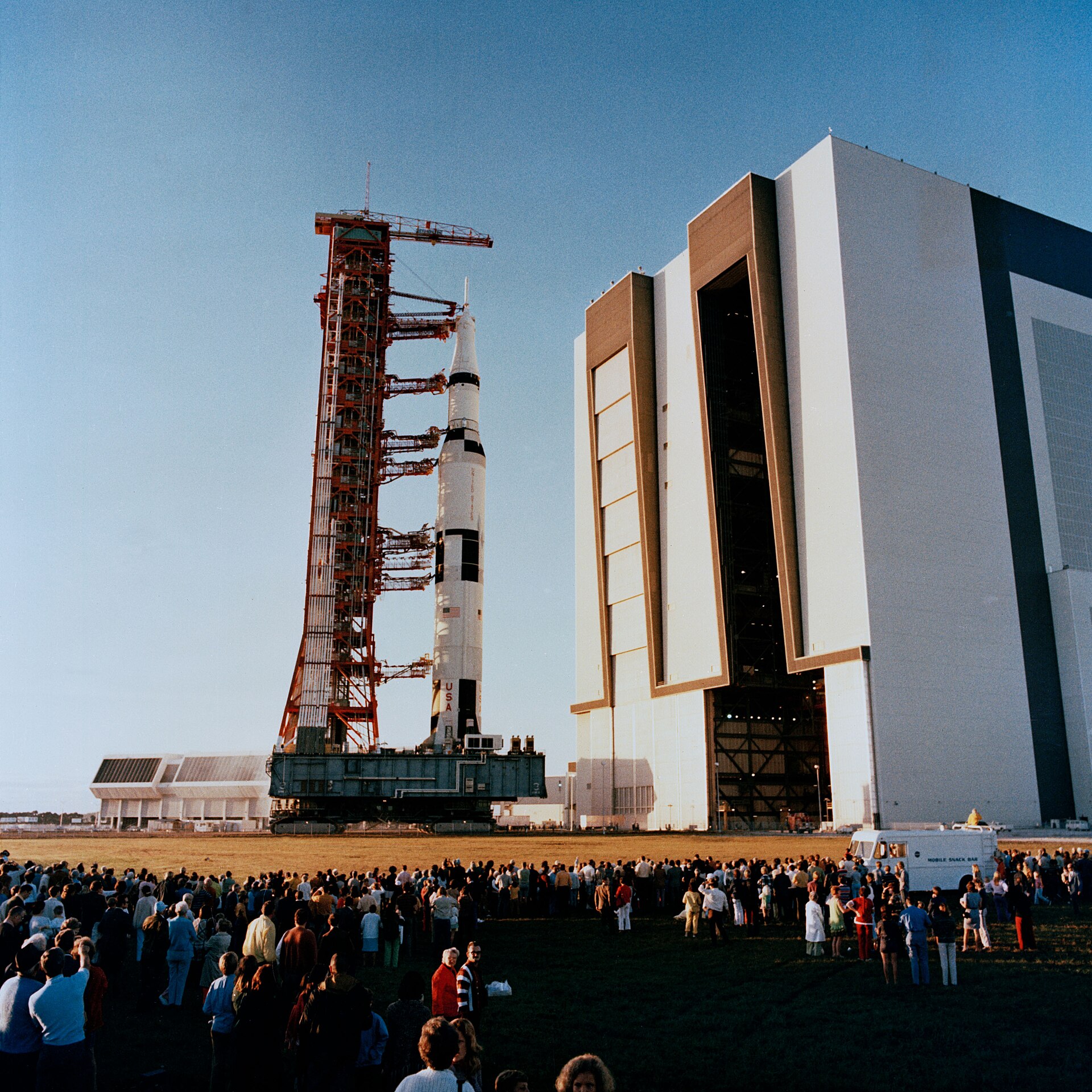
The name “Space Coast” started showing up in Brevard County tourism brochures around 1962 and was being used by the Cocoa Beach Chamber of Commerce in its official materials by 1965. There was no formal naming decision. The phrase emerged from tourism marketing in the post-Sputnik, pre-Apollo window and stuck because it captured what was happening on the ground.
Before “Space Coast” there were several other branding attempts. “The Cape Coast.” “The Indian River Country.” “The Missile Coast.” Each had a brief run in tourism materials. None had legs.
The pre-space brandings
Through the late 1940s and 1950s, Brevard tourism marketing emphasized the lagoon, the beaches, and the fishing. Brochures from this period in the Florida Memory archive use phrases like “the Indian River Country,” “Florida’s Riviera,” and occasional invocations of the citrus-grove heritage that was still alive in the area. The dominant draw was sport fishing, the Cape Canaveral area produced national-class snook, tarpon, and king mackerel catches through the 1950s, plus the warm-weather beach trade.
The military presence at Patrick Air Force Base, expanding from 1949 onward, was treated as a footnote rather than a tourism draw in this era. Civilian access to Cape Canaveral was tightly restricted. The launches were not yet publicly marketed.
The shift, 1958-1962
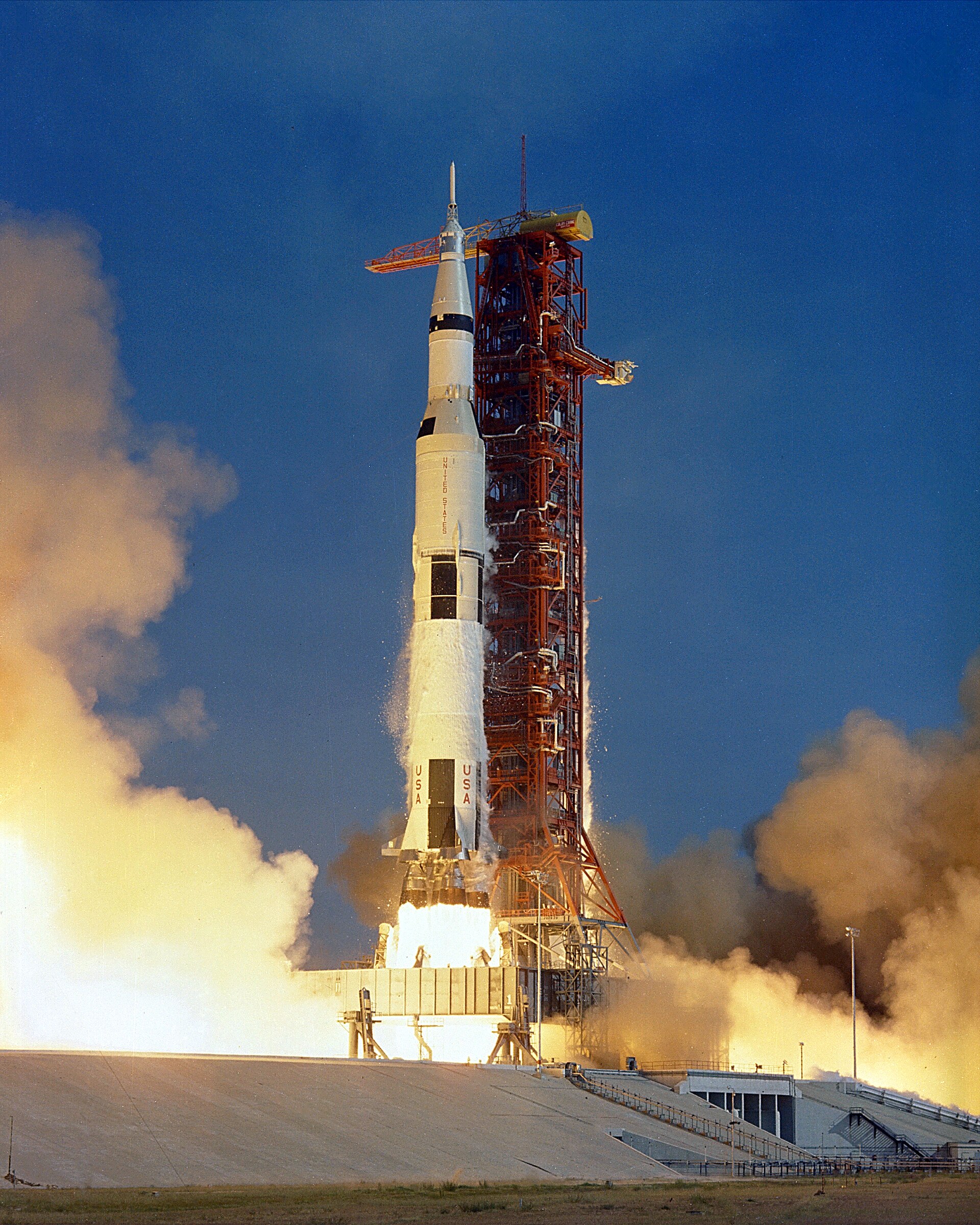
Sputnik 1 launched on October 4, 1957. Explorer 1, the first US satellite, launched from the Cape on January 31, 1958. The Mercury program was announced in 1958 and the seven Mercury astronauts were introduced in April 1959. Project Mercury launches from Cape Canaveral started running through 1961-1963. The public attention shifted fast.
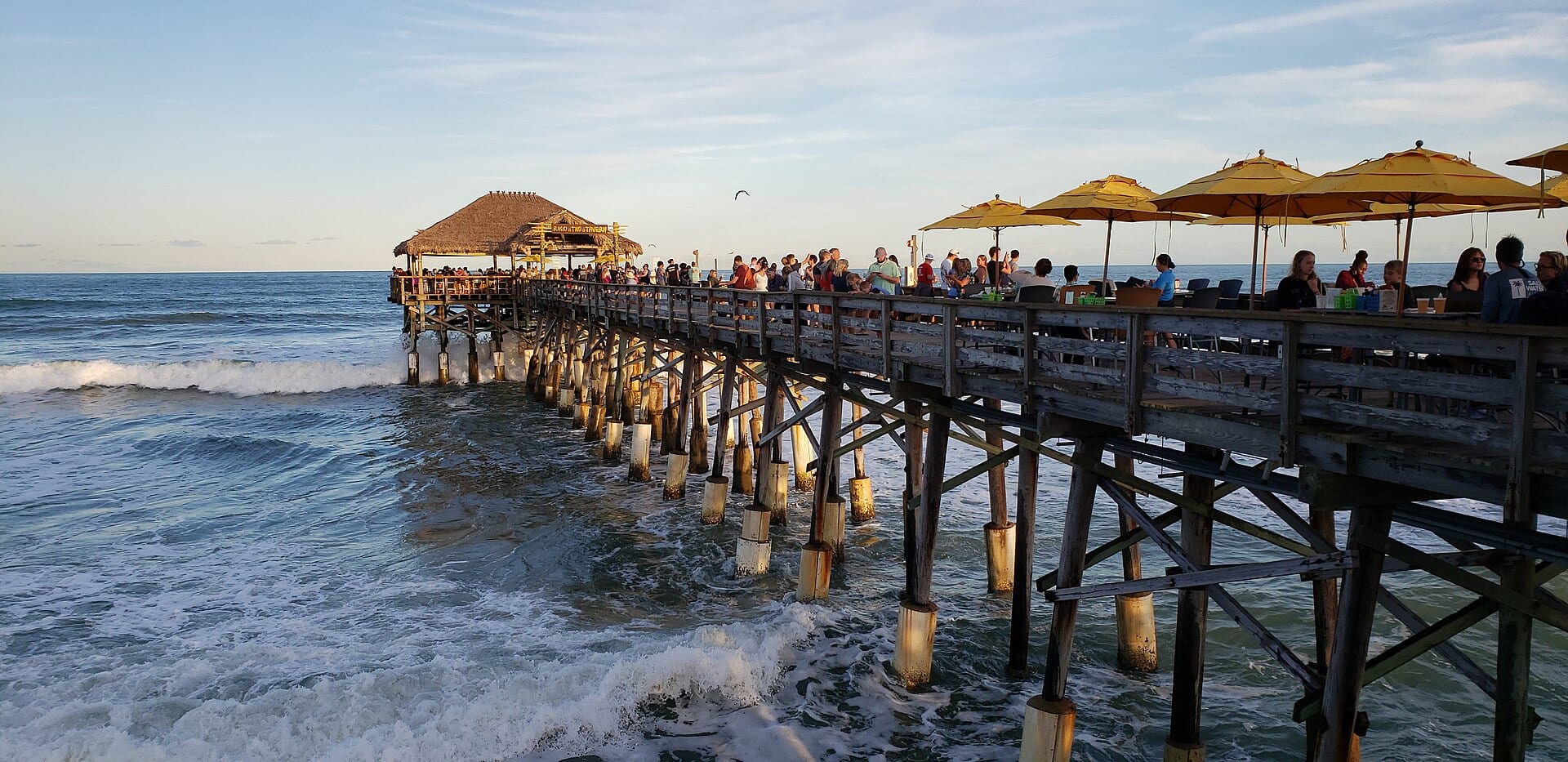
Cocoa Beach was the immediate beneficiary. The town’s full-time population grew from roughly 250 in 1950 to over 3,000 by 1960, a 12x increase in a decade, driven entirely by the influx of Air Force personnel, NACA/NASA engineers, and contractor employees. New motels lined State Road A1A. The Cape Colony Inn, the Polaris Motel, the Vanguard, the Cocoa Beach Pier, all built between 1958 and 1963 to handle the booming visitor trade tied to the launch industry.
The Cocoa Beach Chamber of Commerce, which had been promoting fishing and beach tourism through the 1950s, faced a question by 1961: how to frame the new visitor base? The military presence was sensitive (security classifications, access restrictions). The space program was the obvious draw but didn’t have a settled brand.
Brochures from the 1961-63 era show the experimentation. One Cocoa Beach Chamber brochure from 1962 uses “the Cape Coast” prominently. A 1963 Brevard County tourism flier uses “the Space Coast” in the headline. By 1965, “Space Coast” was the consistent usage across local chambers and Visit Florida materials.
Why “Space Coast” won
The other candidates had problems. “Cape Coast” was geographically narrow and risked confusion with Cape Cod. “Missile Coast” was militaristic in a way that didn’t fit the civilian-aerospace framing the post-NASA marketing emphasized. “Indian River Country” was already established but didn’t capture the new economic driver.
“Space Coast” had three things going for it. It was distinctive, no other US region was calling itself that in 1962. It was aspirational, “space” was an unambiguously positive word in the early 1960s. And it was geographically appropriate, Brevard’s main population centers all sat within sight of the launch complexes, which was not true of any other region with a space industry connection.
The Florida Development Commission, the state’s tourism agency, adopted “Space Coast” in its statewide materials around 1965. Visit Florida (the FDC’s successor agency) has used the brand continuously since.
The official adoption that wasn’t
No single body ever officially named the region. The Brevard County Commission did not pass a resolution. The state legislature did not designate a “Space Coast” region. The closest formal recognition was the renaming of the airport in 1976, when the Melbourne Regional Airport was renamed “Melbourne International Airport” (and the existing Titusville airport became “Space Coast Regional Airport”). The Space Coast Regional Chamber of Commerce, which now represents the entire Brevard County business community, was originally chartered in the 1970s as the “Cocoa Beach Chamber” but adopted the regional Space Coast branding in 1981 as it expanded its membership.
The naming was bottom-up. Tourism brochures, motel marquees, T-shirts, postcards, the brand crystallized in commercial usage faster than any formal body could ratify it.
What the brand carries
“Space Coast” today is the formal regional identity for Brevard County. The local sports teams use it (Brevard Manatees were “Space Coast Spotted Cats” briefly in the 1990s). The economic development council uses it. The Visit Florida regional marketing uses it. The Wikipedia article for Brevard County uses it as the regional identifier.
What “Space Coast” doesn’t capture is the part of the regional identity that predates 1950. The citrus history, the Indian River steamboat era, the Ais people who held the lagoon coast for fifteen hundred years, none of that fits naturally under a brand that emphasizes the 75 years of the rocket program. This publication’s choice of name, “Old Space Coast,” is a deliberate inversion: the region had a history before the rockets, and that history is what makes the rockets a chapter rather than the entire story.
The naming is also a hedge. The space program has gone through three boom-and-bust cycles in Brevard since 1962, Apollo, Shuttle, post-Shuttle. Each downturn drew predictable obituaries for the regional brand. Each time the brand outlasted the downturn because the geography held: the launches are still here, the beaches are still here, the Indian River is still here. “Space Coast” will probably outlast the Space Force the same way “Sunshine State” outlasted the orange industry. The marketing names rarely die. The economic drivers do.
The Patrick AFB rename and the federal naming machinery
The federal-government side of the regional name story moved on a separate track. The Naval Air Station Banana River, commissioned during World War II as a seaplane patrol base, was transferred from the Navy to the Air Force in June 1948 and redesignated the Joint Long Range Proving Ground in June 1949. The facility took its modern name, Patrick Air Force Base, on May 17, 1950, honoring Major General Mason Patrick. That rename happened ten weeks before the first Bumper rocket flew from Cape Canaveral on July 24, 1950, and it set the federal-agency naming pattern that would shape every subsequent regional label.
The pattern is consistent. The federal facilities sit on Air Force or NASA land and are named for personnel or programs. The civilian region that built up around them takes its name from commercial tourism, not military protocol. Patrick AFB was never the “Space Coast Air Force Base.” Kennedy Space Center, dedicated by President Johnson on November 29, 1963, six days after the assassination, took the name of a single person rather than a region. The county and chamber adopted “Space Coast” precisely because no federal agency had a claim to it. The brand belongs to the tourism economy, not the launch agencies.
The Florida Development Commission’s role
The Florida Development Commission, the state’s tourism agency through the 1960s, was the institutional actor that consolidated “Space Coast” as the formal regional designation. The FDC’s regional marketing in 1965-1968 used the term in trade-show materials, in cooperative advertising with the local chambers, and in the annual Florida vacation brochure distributed to northern travel agents. Once the FDC adopted a regional name, it became the default in every subsequent state marketing document, in atlas legends, and in the AAA Florida tourbook. By the time the FDC reorganized into Visit Florida in 1996, “Space Coast” had been the official regional brand for thirty years.
The FDC also did the legal work of registering the name. The Brevard County tourism office holds a state trademark on “The Space Coast” and on “Florida’s Space Coast,” renewed every ten years since the original registration. The trademark exists primarily to prevent competing Florida regions from claiming the term. Volusia County, which hosts the southern end of NASA’s Merritt Island holdings at Canaveral National Seashore, briefly marketed itself as part of the “Space Coast” in early-1980s tourism materials before settling on “Daytona Beach Area” instead.
What the brand obscures
The Space Coast label compresses several distinct things into one identifier. The launch infrastructure sits on federal land that civilians cannot enter without escort. The tourism economy depends on the launches but exists on the barrier-island municipalities of Cocoa Beach, Cape Canaveral, and Satellite Beach. The mainland economy of Cocoa, Rockledge, Titusville, and Melbourne runs on a different mix: defense contractors, healthcare, education, retail, light manufacturing. None of those mainland industries are particularly “spacey.” Calling the whole county the Space Coast flattens that variation in service of a marketing message that primarily benefits the beach communities and the launch contractors.
The brand also obscures the regional dependence on the federal budget. NASA and Department of Defense spending have driven the local economy through every boom-and-bust cycle since 1958. When the Apollo program ended in 1972, the Space Coast brand survived but the county lost roughly 20,000 aerospace jobs in four years (per Bureau of Labor Statistics data for the 1969-1975 period). The brand persists across budget cycles because tourism marketing rewards continuity, not because the underlying economy is stable.
Further Reading
As an Amazon Associate we earn from qualifying purchases.