Project Bumper and the First Launch from Cape Canaveral, July 24, 1950
Bumper 8 lifted off from Launch Complex 3 at 9:28 AM on July 24, 1950. It was a recycled V-2 first stage with a WAC Corporal second stage, badly malfunctioning, and the formal beginning of the space program on the Space Coast.
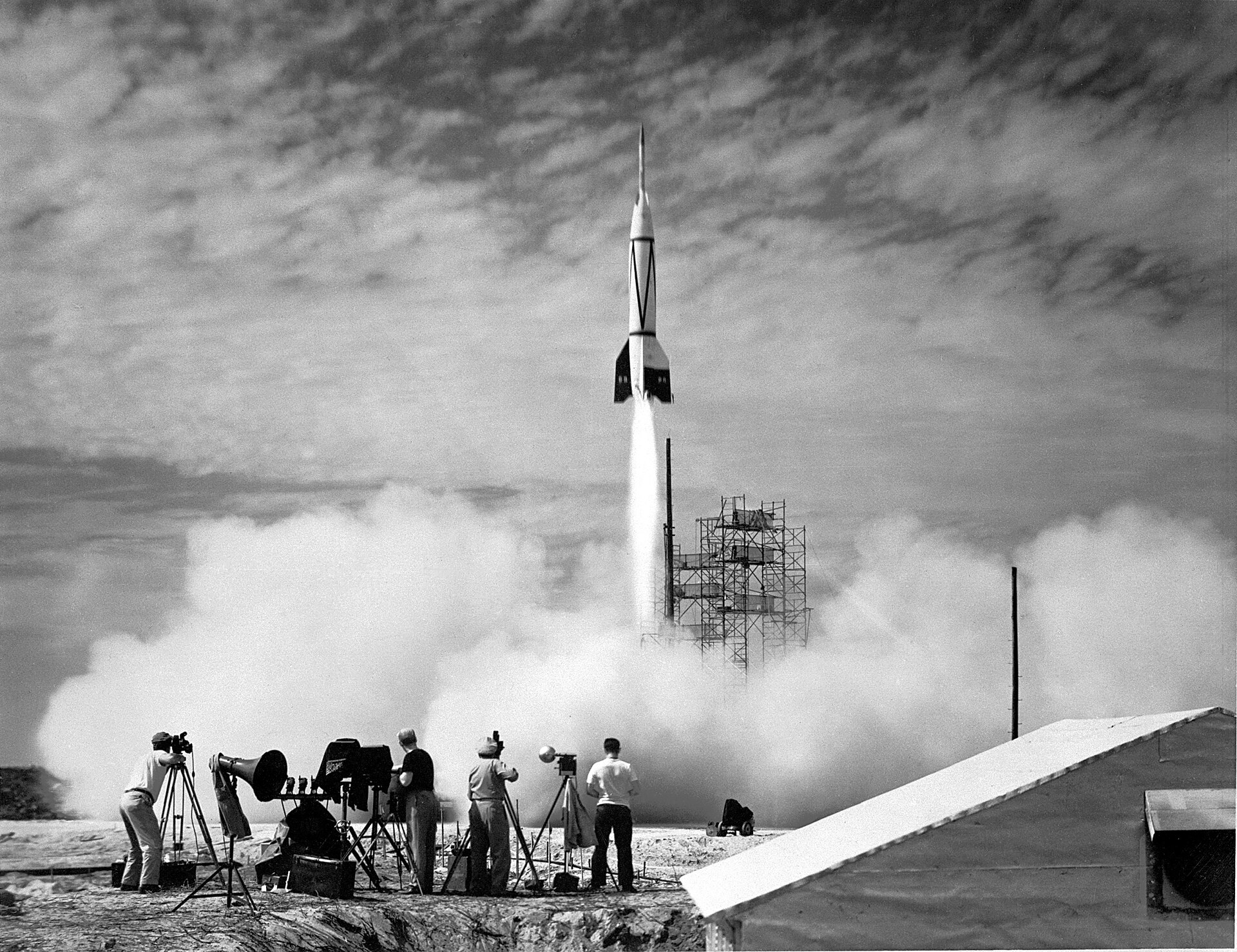
Bumper 8 lifted off from Launch Complex 3 at Cape Canaveral at 9:28 AM on July 24, 1950. The rocket failed early in flight, never reached useful altitude, and crashed downrange in the Atlantic. By any operational measure it was an unsuccessful launch. By any historical measure it was the beginning of the American space program at Cape Canaveral.
The two-stage Bumper was a recycled German V-2 first stage with an American-designed WAC Corporal second stage stacked on top. Total height was about 62 feet. The first six Bumper launches happened at White Sands Proving Ground in New Mexico between 1948 and 1950. The seventh and eighth were the first launches from the Cape.
Why Cape Canaveral
The Joint Long Range Proving Ground was established in October 1949 by Department of Defense directive. The mission was missile testing, the new generation of strategic rockets the Air Force, Army, and Navy were beginning to develop required a test range that could safely accommodate long downrange flight paths. White Sands, the wartime proving ground in New Mexico, was constrained by surrounding civilian land and by short downrange tracks.
The site selection board considered the Atlantic coast of Florida, the Gulf coast of Texas, and southern California. Florida won on three grounds: long open-water downrange tracks across the Atlantic to British-leased instrumentation islands in the Bahamas; latitude advantage for orbital launches (the Earth’s rotation gives a boost roughly proportional to cosine of latitude); and the existing facility at Naval Air Station Banana River, which the Air Force took over in 1949 and renamed Patrick Air Force Base in 1950.
Construction of the first launch complex at Cape Canaveral, Launch Complex 3, started in early 1950. By July, the gantry, blockhouse, and launch table were ready for the first vehicle.
The vehicle
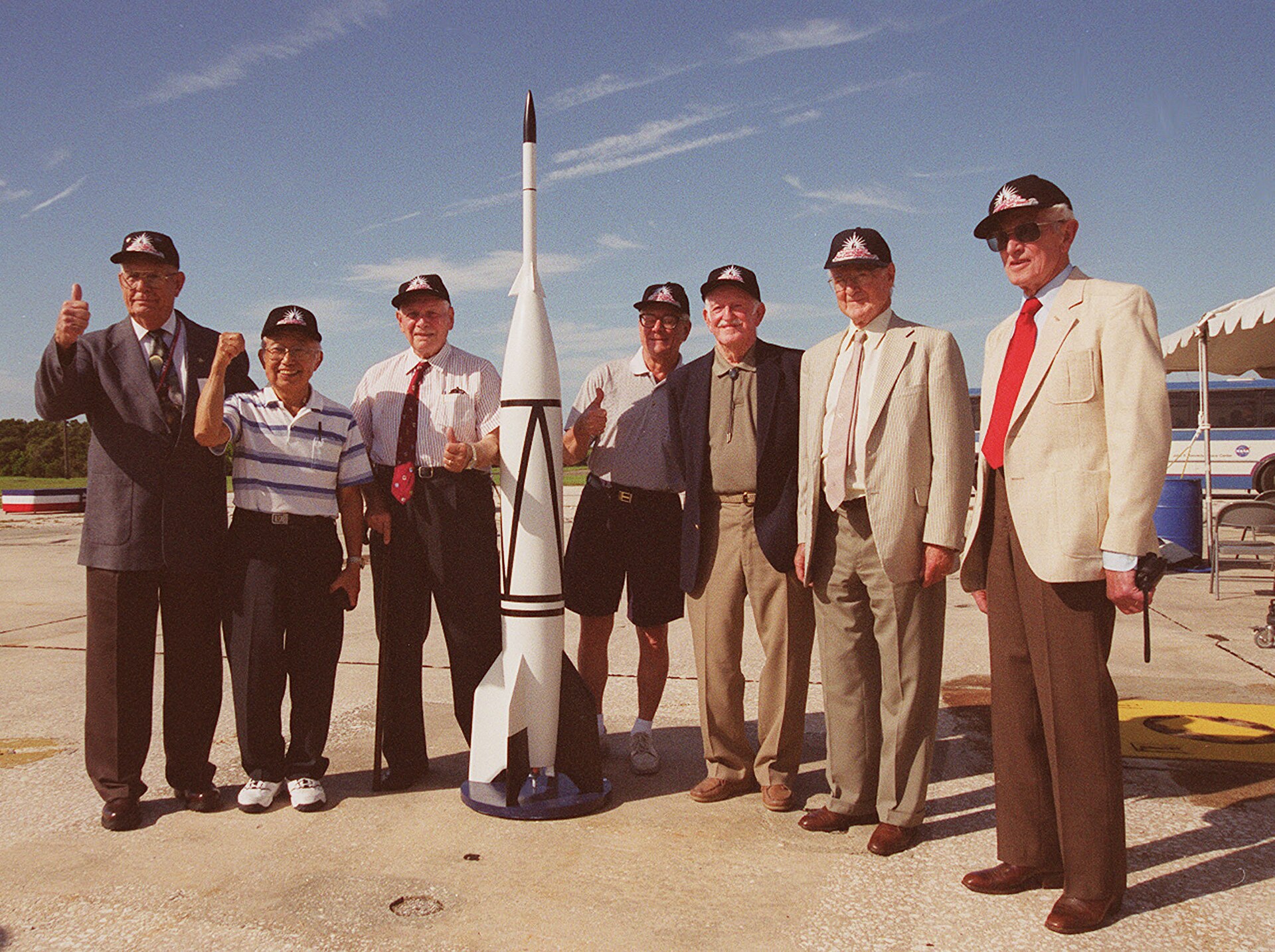
The Bumper was an interim test vehicle. The V-2 was the German Aggregat-4 rocket developed at Peenemünde during World War II, captured nearly intact by US forces in 1945 along with substantial numbers of trained engineers (Operation Paperclip). The Army Ordnance Department brought roughly 100 V-2 airframes and 130 Peenemünde engineers, including Wernher von Braun, to White Sands.
The first US V-2 launches at White Sands in 1946-1947 demonstrated the rocket worked. The Bumper program added a second stage, the WAC Corporal, a small US-designed liquid-fueled sounding rocket developed by JPL and Caltech, to test staging, high-altitude flight, and to gather upper-atmosphere data.
Bumper 5, fired from White Sands on February 24, 1949, reached 244 miles altitude, the highest any human-built object had ever flown. Bumper 7 (the first Cape Canaveral attempt, on July 19, 1950) and Bumper 8 (the successful Cape Canaveral launch, July 24, 1950) were the last of the program before the V-2 inventory ran out.
What happened on launch day
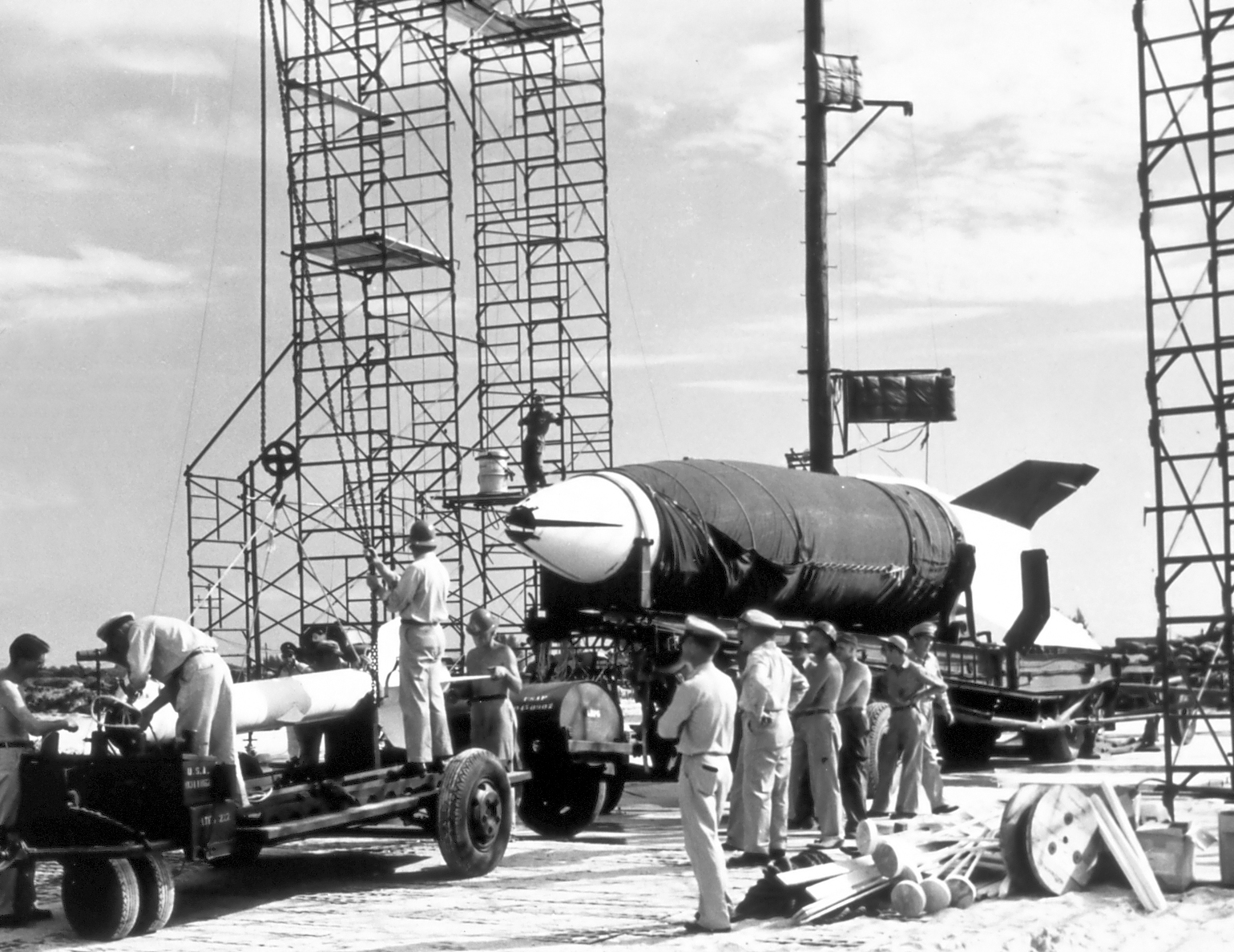
The Cape Canaveral facility in July 1950 was minimal. Launch Complex 3 was a paved pad about 100 feet on a side, a steel gantry tower, and a concrete blockhouse roughly 300 feet to the south. The blockhouse held the firing crew, the launch console, and the recording instrumentation. Photographers worked from a sand-bag emplacement closer to the pad.
The 9:28 AM launch was the second attempt. Bumper 7, on July 19, had aborted at engine ignition because of a fault in the V-2 fuel system. The crew rolled Bumper 7 off the pad, rolled Bumper 8 on, and tried again five days later.
Bumper 8 lit successfully, lifted off, climbed for about 30 seconds, then went erratic. The V-2 first stage failed early. The vehicle pitched off course and crashed in the Atlantic about 50 miles downrange. The WAC Corporal second stage may have separated but did not perform its intended high-altitude burn. The flight produced essentially no useful data on staging performance.
The launch crew counted it a success anyway, because the pad and blockhouse infrastructure worked, the gantry rolled back on schedule, the firing sequence executed correctly, and the range instrumentation tracked the vehicle through its short flight. The first launch from the new Cape Canaveral range had happened. That was the test of the facility, not of the rocket.
What followed
The Cape Canaveral launch tempo expanded rapidly. Lark surface-to-air missiles, Matador cruise missiles, and Redstone short-range ballistic missiles started flying from the Cape in 1950-1953. The first launch of an Atlas ICBM was June 11, 1957. The first Vanguard test launch (a satellite-launching vehicle) was December 8, 1956. Explorer 1, the first US satellite, launched January 31, 1958 from Launch Complex 26 at the Cape, four months after Sputnik 1.
By 1960 the Cape was hosting launches at a rate of one per week. By 1965, with the Apollo Saturn IB and Saturn V test launches beginning, the facility had expanded north onto Merritt Island as the Kennedy Space Center, with Launch Complex 39 serving the lunar program.
Launch Complex 3 itself was retired after the Bumper program. The site is now a historic landmark on Cape Canaveral Space Force Station. The launch pad concrete is still in place, badly weathered but intact. A small memorial plaque marks the July 24, 1950 launch.
What the people on the ground saw
Cocoa Beach in July 1950 was a town of roughly 250 year-round residents. The Cape launches were visible from any beachfront house. The Bumper 8 launch generated a noticeable boom, a visible smoke trail, and roughly 30 seconds of climb visible to the naked eye before the vehicle disappeared into the Atlantic clouds. The local newspaper, The Brevard Engineer, ran a small story on page 3. The launch was not classified, but it was technical enough that the local coverage emphasized the curiosity rather than the strategic significance.
The full strategic context was clear within a few years. By 1957, Sputnik 1 had made the Cape’s mission obvious. By 1969, the Saturn V launches drew crowds of half a million people to the Titusville waterfront. Bumper 8 was a recycled war rocket that didn’t work. It was also where everything that came after started.
The town that hosted the launch is the same town. Cocoa Beach in 2026 has 11,000 year-round residents, billions in tourism revenue, a substantial Air Force and contractor population, and a public identity built entirely around being the closest beach to the rockets. None of that was visible on July 24, 1950, when an undocumented V-2 from World War II fell into the Atlantic 50 miles offshore. But it all started that day.
What Bumper 8 actually did, and what Bumper 7 actually did
The popular telling of the Bumper Cape Canaveral story compresses two flights into one heroic moment. The detailed flight records correct that. Bumper 8, the July 24 launch, lifted off, and its V-2 first stage pitched to only 10 degrees rather than the planned 22 degrees. The vehicle reached an apogee of just 16.1 kilometers (10.0 miles) on a low-angle trajectory that covered roughly 320 kilometers of downrange. The WAC Corporal second-stage nose failed after stage separation; no telemetry was received from the Corporal. The flight ended in the Atlantic with most of the intended scientific data unrecorded.
Bumper 7, fired on July 29, 1950 (five days after Bumper 8, with the order reversed from the original numbering because Bumper 7’s first attempt on July 19 had aborted), did somewhat better. Its V-2 also reached 16.1 km apogee. The thrust decay occurred 14 miles east of the Cape at 8.5 miles altitude. The WAC Corporal achieved 3,286 mph, about half its expected speed. Cape commander Colonel Harold R. Turner publicly called Bumper 7 “a complete success in every way.” Internal flight reports were less generous, both vehicles fell well short of the apogees Bumper 5 had reached at White Sands in February 1949 (244 miles, the world altitude record at the time).
The tracking ship USS Sarsfield, stationed in the Bahama Channel, monitored the downrange portions of both flights. The teflon nose-cone coating and perlite body insulation added to the final-flight WAC Corporals were intended to test atmospheric-friction resistance on a low-angle profile, which is why both Cape flights flew the low trajectories rather than the high-altitude profile Bumper 5 had pioneered. They were boundary-layer aerothermal tests, not altitude record attempts.
The Joint Long Range Proving Ground origin
The federal-program structure that made the Bumper launches possible began on October 1, 1949 with the activation of the Joint Long Range Proving Ground at the former Banana River Naval Air Station, the Navy facility transferred to the Air Force in June 1948. The Air Force renamed the activated facility the Long Range Proving Ground Base on May 17, 1950, then Patrick Air Force Base on the same date, in honor of Major General Mason Patrick. That sequence (June 1948 NAS transfer, October 1949 JLRPG activation, May 1950 Patrick rename, July 1950 first Cape launch) compressed the entire institutional transformation of the Banana River corridor into 25 months.
President Truman approved the original JLRPG site selection on October 1, 1949. The Department of Defense site-selection board had compared the Atlantic coast of Florida, the Gulf coast of Texas, and southern California. Florida’s advantages were the open-water downrange tracks across the Atlantic to British-leased instrumentation islands in the Bahamas, the latitude advantage for orbital launches (the Earth’s rotation gives a velocity boost proportional to the cosine of latitude, so a launch from 28°N gains more than one from 35°N), and the existing facility at NAS Banana River that the Air Force had just acquired. Florida won on all three criteria.
What the V-2 inventory looked like in mid-1950
Of the roughly 100 captured V-2 airframes Operation Paperclip had brought to White Sands between September 1945 and 1947, fewer than 10 remained in usable condition by mid-1950. Several had been expended in the original V-2 firing program at White Sands (April 1946 through 1947), others in the first six Bumper launches (May 13, 1948 through April 20, 1950, all at White Sands), and the remainder had been cannibalized for parts or lost to corrosion during storage at Fort Bliss. Bumper 7 and Bumper 8 were among the last available V-2 first stages. The team that flew them at the Cape was effectively closing out the German rocket inventory; everything that followed at Cape Canaveral used American-designed boosters.
Wernher von Braun’s team had transferred from Fort Bliss to Redstone Arsenal in Huntsville, Alabama on April 1, 1950, three months before the Cape launches. Most of the Bumper firing crew at the Cape were US Army Ordnance staff plus a small contingent of Paperclip engineers who had stayed with the White Sands operation through the program closeout. Von Braun himself was not at the Cape for either Bumper launch. He was setting up the Redstone program in Alabama, which would produce the first American-designed strategic rocket within two years and the Mercury-Redstone launch vehicle that put Alan Shepard into space in May 1961.
Further Reading
As an Amazon Associate we earn from qualifying purchases.