Harry T. Moore, Killed in Mims on Christmas Day 1951
Harry T. and Harriette V. Moore were killed by a Klan bombing of their Mims home on December 25, 1951. The first NAACP official murdered in the modern civil-rights era.
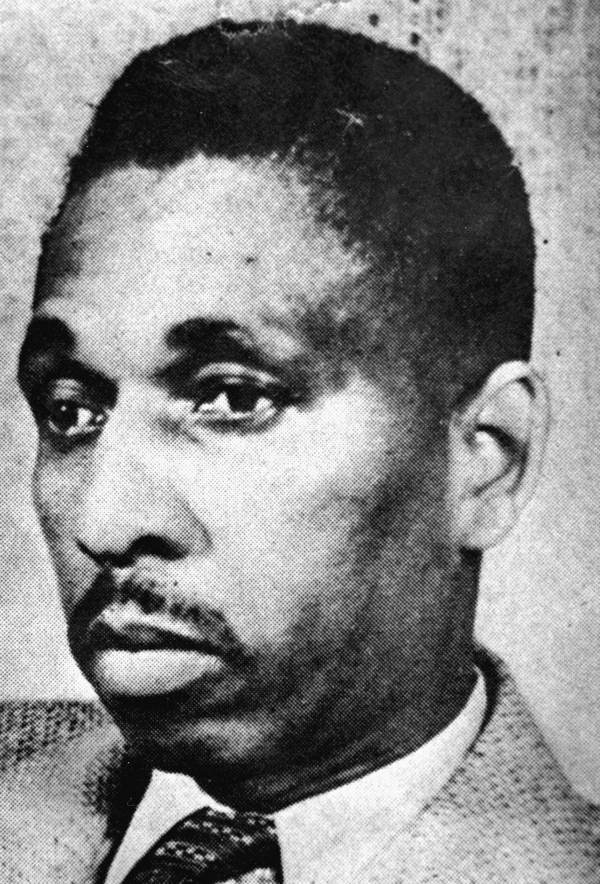
The bomb exploded under the bedroom of Harry T. and Harriette V. Moore at 10:20 PM on December 25, 1951. The blast lifted the Moores from their bed and collapsed the floor beneath them. Harry died en route to Sanford Memorial Hospital that night. Harriette died of her injuries nine days later. They had been married 25 years and were celebrating their wedding anniversary that evening. They were 46 and 49.
Harry T. Moore was the first NAACP official killed in the modern civil rights era. The murder was not solved during the surviving witnesses’ lifetimes. A 2006 Florida state investigation identified four Klansmen as the bombers, all of whom were dead by 1955.
Who Moore was
Harry Tyson Moore was born in Houston, a small community in Suwannee County, Florida, on November 18, 1905. He attended Florida Memorial College in Live Oak and qualified as a teacher in 1925. That same year he accepted a position at the Titusville Colored School in Brevard County. In 1926 he married Harriette Vyda Simms, also a teacher. They had two daughters, Annie Rosalea and Juanita Evangeline.
Moore taught in Brevard County schools for 21 years (1925-1946), serving as principal of the Mims Elementary School (the Black elementary school at LaGrange in Mims) from 1936 to 1946.
In 1934 he organized the Brevard County branch of the NAACP. By 1941 he was Florida State NAACP president. By 1944 he was full-time executive secretary of the Florida State Conference of NAACP Branches. Moore’s primary work was voter registration. He personally registered tens of thousands of Black voters across Florida between 1944 and 1951, often facing harassment and threats in the process. By 1950 the state had over 100,000 registered Black voters, the highest of any southern state, largely because of Moore’s persistent organizing.
He also pursued teacher salary equalization, anti-lynching investigations, and equal-funding lawsuits for Black schools. In 1942 he led a successful NAACP lawsuit that established equal pay for Black teachers across Florida. In the late 1940s he documented eleven Florida lynchings and pressed for federal anti-lynching legislation.
What made him a target
Moore worked at a time when Florida’s white power structure tolerated only limited Black political activity. The state had been the site of the 1923 Rosewood massacre, multiple Klan revivals through the 1920s-1940s, and continuing extralegal violence against organizers. Moore was unusual in the persistence of his work and in the geographic reach of his organizing.
Two specific cases pushed Moore into greater visibility in 1949-1951:
The Groveland Four case. Four Black men in Lake County (Charles Greenlee, Sammy Shepherd, Walter Irvin, and Ernest Thomas) were accused of raping a white woman in July 1949. Thomas was killed by a posse before any trial. The other three were tried and convicted on weak evidence. Moore organized national NAACP attention on the case, working with Thurgood Marshall and the NAACP Legal Defense Fund. The US Supreme Court overturned the convictions in 1951 and ordered new trials.
In November 1951, Lake County Sheriff Willis McCall, transporting Shepherd and Irvin to a pretrial hearing, shot both prisoners on a back road, claiming they had attempted to escape while handcuffed together. Shepherd died at the scene. Irvin survived and testified that McCall had shot them in cold blood. Moore publicly demanded McCall’s suspension and federal civil rights prosecution. McCall faced no charges and remained in office for two more decades.
The 1946 firing. In 1946 Moore was fired from his Brevard County teaching position, ostensibly for budget reasons but openly understood as retaliation for his NAACP work. The firing freed him to work full-time for the NAACP and intensified his political activity through the late 1940s.
The bombing
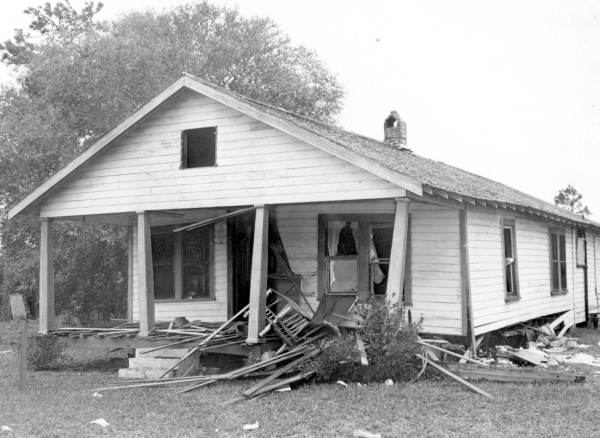
The Moores spent Christmas Day 1951 with their daughter Annie Rosalea at the LaGrange home. They went to bed late that evening. At approximately 10:20 PM, dynamite placed under the floor joists of their bedroom exploded.
The blast destroyed the rear of the small frame house. Harry Moore was found semi-conscious in the wreckage; he was loaded onto a flatbed truck and driven by a relative to Sanford Memorial Hospital, about 35 miles away, because Brevard’s segregated hospital system did not accept Black patients in emergency cases. Moore died en route. Harriette Moore was conscious for several days but died of her injuries on January 3, 1952.
The FBI’s initial investigation, opened on December 26, focused on the Florida Ku Klux Klan. Agents identified the Orange County and Brevard County Klan klaverns as having the means and motive. Multiple Klan informants, including a paid FBI source within the Brevard County klavern, provided information identifying four Klansmen as the bombers: Earl Brooklyn, Tillman Belvin, Joseph Cox, and Edward Spivey.
The FBI investigation collapsed in 1953-1955 without prosecution. The four suspects either died of natural causes (Brooklyn 1952, Belvin 1953) or by suicide (Cox 1952) or simply outlived the investigative window (Spivey, who survived into the 1980s). The FBI declined to pursue charges given the evidentiary gaps and the deaths of key suspects.
The 2006 investigation
In 2005, Florida Attorney General Charlie Crist opened a new state investigation into the Moore case at the request of the Moore family and civil-rights organizations. The investigation, led by Florida Department of Law Enforcement special agents, reviewed the FBI files, interviewed surviving witnesses, and concluded in August 2006 that Brooklyn, Belvin, Cox, and Spivey had planned and executed the bombing.
The 2006 report did not produce any new prosecutions because all four named suspects were dead. The Florida state legislature passed a 2006 resolution acknowledging the Moores’ deaths as a state-level civil rights atrocity. No federal action followed.
Why Moore matters
Moore is often described as the first NAACP official murdered in the modern civil rights era. The framing is contested by historians of civil rights, some of whom point to earlier killings (Lemuel Penn, Medgar Evers) as comparable, and others who note that earlier Black activists had been killed before Moore for similar reasons going back into the 19th century. What is uncontested is the specifically organized nature of Moore’s work and the brazenness of the assassination, a sitting state NAACP executive secretary, killed in his own home, on his wedding anniversary, by an organized terror cell, with the public response that nothing followed.
The case framed the rest of the 1950s for the Florida NAACP. State organizing activity continued under new leadership (T.J. Davis, then Edward Davis) but with substantially more caution about visible activism. Voter registration drives continued at lower intensity. The lynching investigations that Moore had pursued were largely suspended; without an organized federal protection apparatus, the state-level NAACP officials simply could not safely do that work.
The federal civil rights apparatus, the 1957 Civil Rights Act, the 1964 Civil Rights Act, the 1965 Voting Rights Act, the Justice Department’s Civil Rights Division, eventually built infrastructure that would have made Moore’s death cost-of-business in a way the 1951 system did not. Moore worked without that infrastructure. He died because of its absence.
What survives
The Moore home was rebuilt as a replica on the original site at 2180 Freedom Avenue in Mims. The site is now the Harry T. and Harriette V. Moore Cultural Complex, operated by the Brevard County Cultural Council. The complex includes the replica home, a museum building, and grounds with interpretive signage.
The Moore Memorial Park sits adjacent to the complex. The Brevard County Sheriff’s Office relocated its Mims substation in 2014 to be near the complex, an administrative gesture acknowledging the historical weight of the site.
The Moores are buried in LaGrange Cemetery, a few hundred yards from the bombing site. The graves are marked with a single shared monument bearing both their names and the inscription “FIRST MARTYRS OF THE NAACP.”
The Harry T. Moore Justice Center in Viera, the Brevard County courthouse complex, is named in his honor. The naming was controversial, some county commissioners opposed it on the grounds that it politicized a public building. The naming was approved by a 3-2 vote in 2006.
Several Florida civil rights organizations operate Moore Fellowship programs continuing his work. Florida Memorial University, the same institution where Moore earned his teaching credentials in 1925, hosts annual Moore lectures and a research archive.
The murderers were never prosecuted. The cost of organizing in 1951 Florida was paid by the Moores, in the home where they had lived for 25 years, on the night they were celebrating their marriage. The voter registration work continued. The schools eventually integrated. The county that fired Harry Moore in 1946 now has a courthouse named for him. The order of those things matters.
Further Reading
As an Amazon Associate we earn from qualifying purchases.