The Eau Gallie / Melbourne Merger of 1969
Eau Gallie and Melbourne were separate cities for almost a century before merging in 1969. The merger created the city of Melbourne in its modern form.
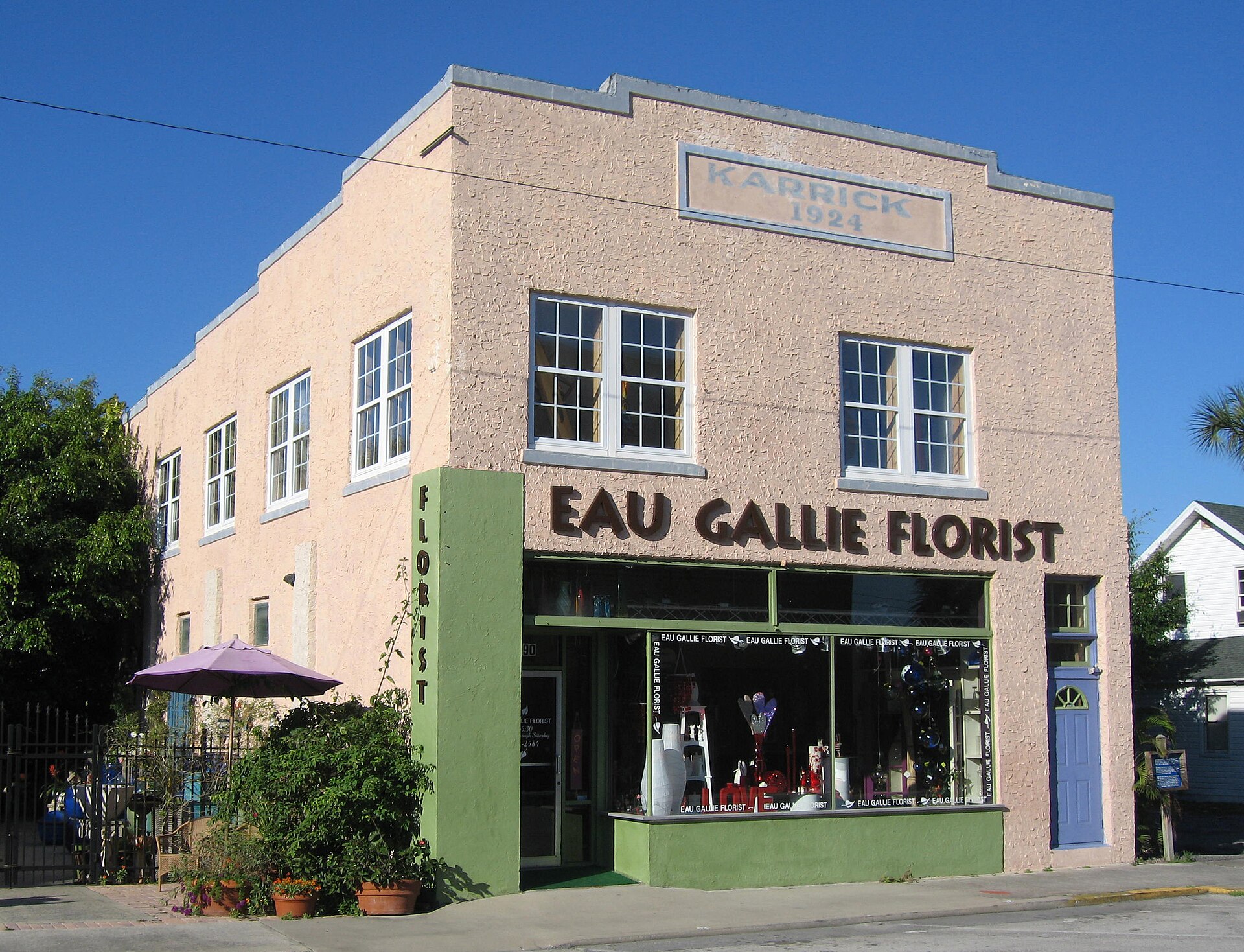
Eau Gallie and Melbourne sat next to each other on the Indian River for 92 years before merging on October 1, 1969. The merger created the modern city of Melbourne, with a combined population that immediately became the second-largest in Brevard County after Cocoa. The two cities had been functional neighbors since their incorporations in the 1880s, with overlapping economies, shared infrastructure, and a long history of small-scale competition.
Eau Gallie
Eau Gallie was platted in 1860 by William Henry Gleason, a New York investor and politician who later served as Florida’s lieutenant governor (1869-1870) during Reconstruction. Gleason chose the site at the mouth of the Eau Gallie River (originally the Elbow River; the French-language “Eau Gallie”, French for “rocky water”, was Gleason’s renaming) on the western shore of the Indian River. The site had good fresh water, deep-water access to the lagoon, and was at the practical southern terminus of regular Indian River steamboat traffic.
Settlement was slow through the 1860s and 1870s. The Civil War interrupted Gleason’s initial plans. By 1875 the settlement had perhaps 200 residents. The Florida East Coast Railway reached Eau Gallie in November 1894, triggering the first real growth. The town was incorporated in 1898.
By 1925 Eau Gallie had approximately 1,200 residents, a small downtown commercial district, several churches, a school, and the Eau Gallie Yacht Club (organized 1907). The economy mixed citrus, pineapples, fishing, and small-scale tourism.
Melbourne
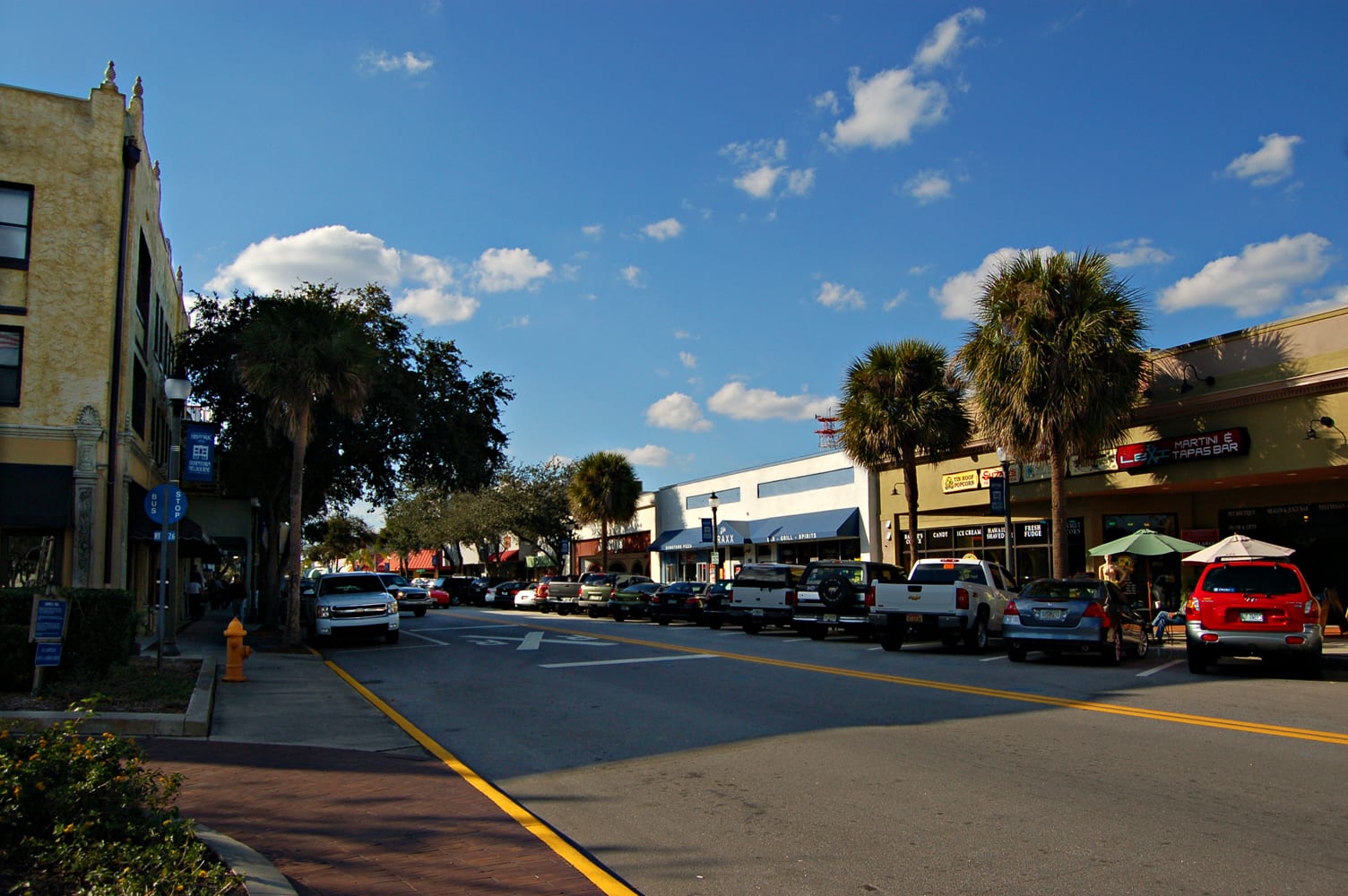
Melbourne was settled slightly later than Eau Gallie. The town was platted in 1880 by Cornthwaite John Hector, an Australian immigrant who named the settlement after his hometown in Australia (despite some local lore attributing the name to Melbourne, England). The site was on Crane Creek at the southwestern edge of the Indian River, about three miles south of Eau Gallie.
Melbourne grew faster than Eau Gallie initially because of its better natural harbor at Crane Creek and slightly more accessible inland connections. The Florida East Coast Railway depot at Melbourne was built in 1894, the same time as Eau Gallie’s. Melbourne incorporated in 1888, a decade before Eau Gallie.
By 1925 Melbourne had approximately 2,000 residents, slightly larger than Eau Gallie. The town’s economy was structurally similar, citrus, fishing, lagoon tourism, with marginally more commercial trade because of the harbor.
The growth pressures of the 1950s-1960s
The post-WWII Brevard population boom hit both cities. Eau Gallie grew from 1,500 in 1940 to 8,500 in 1960. Melbourne grew from 2,800 in 1940 to 11,500 in 1960. The two cities developed nearly continuous residential and commercial development between them, with the formal city boundary running through what had become a single urbanized area.
Several specific issues drove the merger discussion:
- Duplicate municipal services. Both cities maintained their own police, fire, water, sewer, and public works departments. Boundary residents complained about service-area confusion, particularly for emergency response.
- Joint infrastructure. The Eau Gallie Causeway (1923) and the Melbourne Causeway (1923) served what was effectively a single barrier-island community on the Indian Harbour Beach / Indialantic side. Coordination between the two municipalities on causeway maintenance, traffic management, and beach access was awkward.
- School district pressures. Brevard County, which operates the unified school district, was running into problems with two separate municipal governments dictating school site selection and traffic patterns.
- Florida Tech and the aerospace workforce. Both cities housed substantial Patrick AFB and KSC employee populations. The lack of a coordinated municipal government complicated zoning, housing development, and commercial recruitment.
The merger process
The merger discussion started in the early 1960s. A series of joint Eau Gallie / Melbourne committee meetings in 1962-1965 produced consensus that consolidation made administrative sense, but disagreement on the form of the merged government, the city name, and the distribution of representation.
The breakthrough came in 1968. A combined Eau Gallie / Melbourne charter commission, with representatives from both city councils plus civic appointees, drafted a merger document that addressed the key issues:
- City name. Melbourne. (Eau Gallie residents resisted this; the compromise was that the merged city’s downtown district would carry the “Eau Gallie” designation.)
- City government structure. A council-manager form, with seven council seats, four from former Melbourne, three from former Eau Gallie, weighted toward Melbourne’s slightly larger population.
- Initial mayor. The first mayor of merged Melbourne would come from Eau Gallie as a balance.
- Services consolidation. Police, fire, water, sewer, and public works to consolidate within 18 months of merger.
The charter was submitted to a referendum in both cities. Eau Gallie voters approved the merger by approximately 53-47 percent. Melbourne voters approved by approximately 61-39 percent. The merger took effect on October 1, 1969.
What the merger created
The merged city of Melbourne had an immediate population of approximately 30,000, making it the second-largest city in Brevard County. Combined property tax base, combined road system (over 100 miles of streets), combined recreational facilities, combined municipal payroll.
The consolidation process took roughly five years. Police departments were merged in 1970. Fire departments in 1971. Water and sewer utilities took the longest, with full operational consolidation not complete until 1975. Some duplicate facilities (two city halls, two public works yards) operated in parallel for several years before redundancies were addressed through capital project decisions.
The “Eau Gallie” name survived as a downtown district designation. The Eau Gallie Arts District (officially designated by the city in the 1990s) preserves several historic buildings from pre-merger Eau Gallie and serves as an active cultural area with galleries, restaurants, and a regular art-festival schedule.
What the merger erased
The Eau Gallie city government, with its 71-year history of independent municipal operations, ceased to exist on October 1, 1969. The Eau Gallie mayors, councils, police chiefs, fire chiefs, and city employees either transitioned to the new merged government or retired or moved to other employment.
Several Eau Gallie civic identifiers were absorbed into the broader Melbourne identity. The Eau Gallie Public Library was renamed the Eau Gallie Branch of the Melbourne Library. The Eau Gallie school district had already been merged with Brevard County’s countywide system in the 1950s; the merger had no school-district effect.
Some long-time Eau Gallie residents continued to identify the area as “Eau Gallie” rather than “Melbourne” through the 1980s and even into the 2000s. The local newspaper, The Eau Gallie News, continued under that name through 1973 before being absorbed by the broader Brevard Tribune. The phone book listings continued to use Eau Gallie geographic identifiers through the 1990s.
By 2025, the “Eau Gallie” identity has largely receded to the Eau Gallie Arts District, the Eau Gallie Yacht Club (still operating), the Eau Gallie High School (the merged city’s public high school in the former Eau Gallie area), and the Eau Gallie Causeway. The merged city of Melbourne now has a population of approximately 85,000 and is the second-largest city in Brevard County.
What the merger means
The Eau Gallie / Melbourne merger was unusual in Florida municipal history because most attempted city consolidations of the 1960s-1970s failed at the referendum stage. Voters in adjacent cities typically prefer separate identities, even when service consolidation would save money. The Eau Gallie / Melbourne merger succeeded because the two cities had grown so close that residents were already living in what was effectively a single community, and because the financial pressure of duplicate municipal services was substantial.
The merger preserves the model that other Florida municipal consolidations have failed to replicate. Cocoa and Rockledge, in the same county, have had similar discussions multiple times since the 1970s and have never merged. The Cocoa Beach and Cape Canaveral municipalities, also adjacent and similar in size, have stayed separate. The merger of Sunny Isles Beach and North Miami Beach in Miami-Dade was rejected by voters in the 2000s. Each of these examples has had its own reasons, but the underlying pattern is that municipal mergers in Florida are hard, and the Eau Gallie / Melbourne success is the regional exception rather than the rule.
What the merged city of Melbourne carries from its two parent cities is the geography of two parallel waterfronts on the Indian River, two parallel commercial districts (downtown Melbourne and the Eau Gallie Arts District), and a population base distributed across what was historically two distinct settlement patterns. The merger did not erase the dual structure; it just provided a single political administration to manage it.
Further Reading
As an Amazon Associate we earn from qualifying purchases.