Brevard County Agriculture, 1850 to 1970
Cattle came first, then citrus and pineapples, then a brief sugar-cane experiment. By 1970 the space program had bought out most of the agricultural land. The grove rows are subdivisions now.
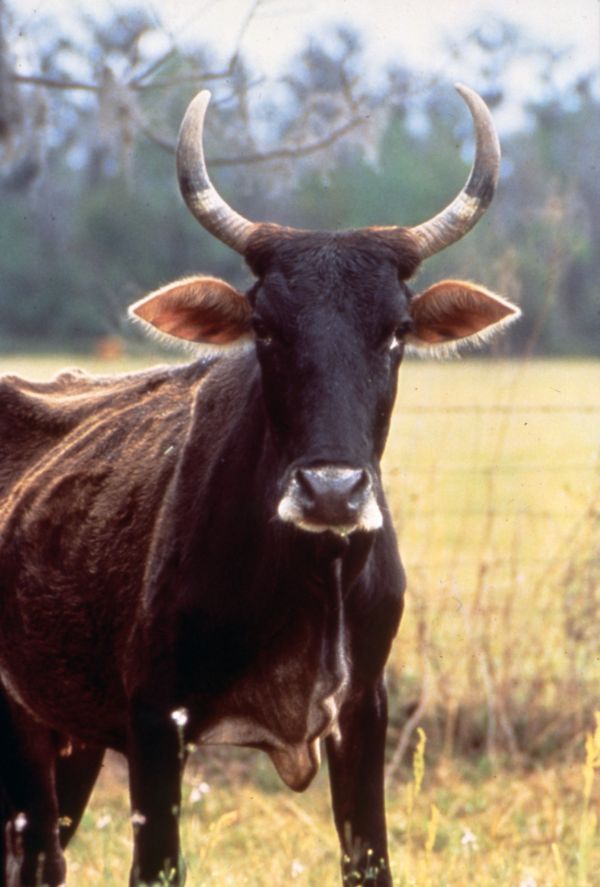
Brevard County was a cattle county before it was a citrus county, a citrus county before it was an aerospace county, and briefly a pineapple county in between. Each agricultural era left its specific imprint on the land. By the time the rocket program absorbed most of the remaining agricultural acreage in the 1960s, almost a century of farming had reshaped the original pine flatwoods and oak hammocks into a settled landscape with grove rows, fence lines, and drainage ditches.
Cracker cattle, 1830s-1900s
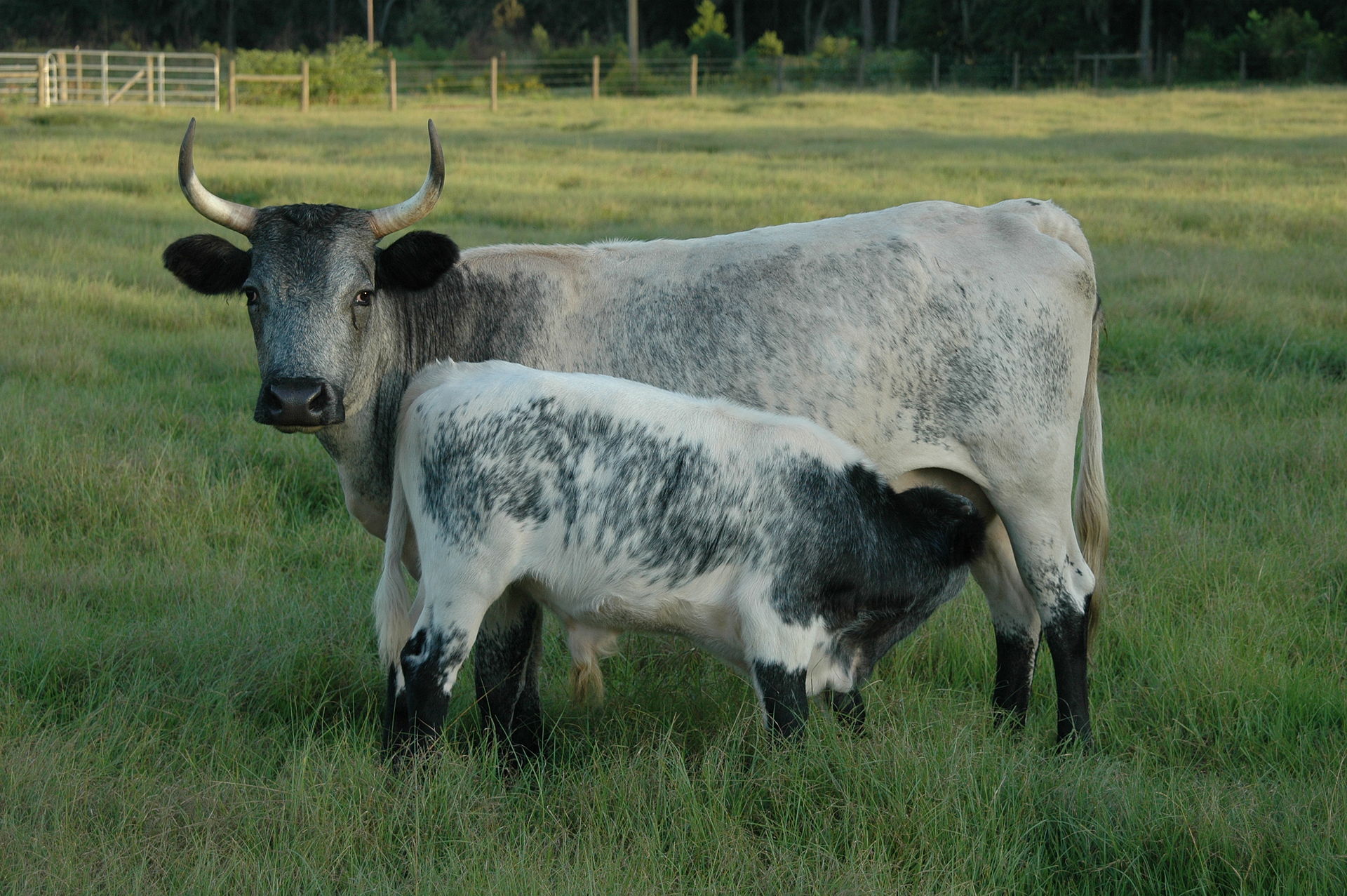
The first European-descended settlers in what is now Brevard, arriving in the 1830s and 1840s, were cattle herders. The Florida cracker cattle they ran were small, lean, descended from Spanish cattle introduced in the 1500s, and adapted to the pine flatwoods and saw-palmetto understory. The herding was open-range, no fences, free movement across thousands of acres of unimproved land. The cattle were rounded up twice a year for branding, market, and selective slaughter.
Brevard’s cattle herd peaked around 1900 at approximately 25,000 head, according to USDA agricultural census records. The cattle moved by drive to Punta Rassa on the Gulf coast, then by ship to Cuban markets. After the 1890s, rail to Jacksonville and other markets took over.
The open-range era ended gradually. Florida’s no-fence laws, which required livestock owners to fence their cattle rather than crop farmers to fence their crops out, passed county by county between 1949 and 1969. Brevard’s no-fence ordinance passed in 1953, effectively ending the open-range cattle economy in the county within a decade.
Several historic cattle ranches in west Brevard, including the Deseret Ranches operations in the Mims-Scottsmoor area, continue cattle production today on substantial acreage. The Mormon Church (LDS) acquired large tracts of former cattle range in the 1950s and 1960s; Deseret Ranches’ Brevard operations are part of one of the largest US cattle holdings.
Citrus, 1880s-1990s
Citrus arrived with the railroad. The Florida East Coast Railway’s extension through Brevard in 1893-94 created the freight infrastructure that made commercial citrus economically viable. The 1894-95 freezes north of Brevard pushed growers south into the county. Brevard citrus acreage rose from roughly 4,000 acres in 1895 to over 16,000 acres by 1960.
The varieties planted reflected the climate. Pineapple oranges, Hamlins, and Valencias were the most common sweet oranges. Marsh and Duncan grapefruit dominated the grapefruit acreage. Sour orange rootstock provided cold-hardiness.
The citrus economy crashed gradually after the 1962 freeze, finished by the 1989 freeze and citrus greening. Most commercial groves were gone by 2000. (Detailed account in our “1962 Freeze” article.)
Pineapples, 1890s-1910s
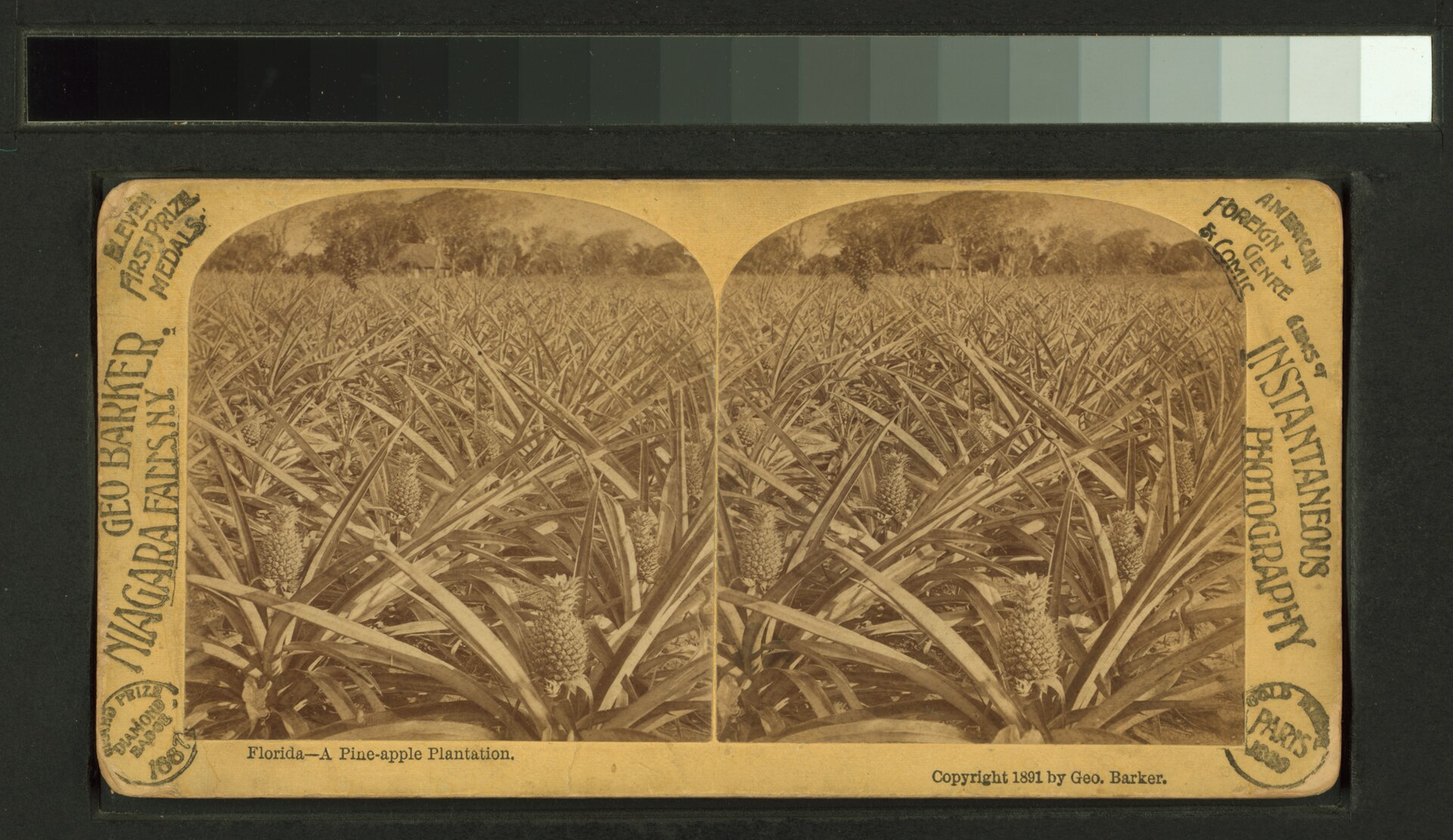
For about twenty years, Brevard ran a substantial pineapple industry. The crop concentrated in the southern part of the county and adjacent areas now in Indian River County, particularly Eden, Eldred, Ankona, Sebastian, and the Banana River shore around Tropic. At peak in 1908-1910, the lagoon-coast pineapple crop produced approximately 1.3 million crates a year.
Pineapples were labor-intensive but high-margin. Growers planted slips (suckers from existing plants) on raised beds, mulched heavily with palmetto fronds, and harvested over a 4-6 month season. The fruit moved north by rail.
The industry collapsed quickly between 1908 and 1915. Three factors:
- Cuban competition. The Cuban pineapple industry, on much cheaper land with cheaper labor, ramped up rapidly after 1898 and undercut Florida prices.
- The 1908 freeze. Pineapples are tropical; even a light freeze damages them. The January 1908 freeze, mild by citrus standards, devastated the Brevard pineapple crop.
- Soil exhaustion. Pineapples deplete soil nutrients quickly. The raised beds typical of Brevard plantings did not hold organic matter well, and replanting on the same ground produced declining yields by the third or fourth cycle.
By 1920 the Brevard pineapple industry was effectively gone. A handful of small operations continued through the 1930s. The post-WWII residential and citrus expansion absorbed the remaining pineapple ground.
Sugar cane experiments, 1850s-1900s
Several attempts to establish sugar cane as a Brevard commercial crop happened between the 1850s and the 1900s. Plantations in the LaGrange area (near today’s Mims), at Eau Gallie, and at the Sebastian River tried cane production using either local labor or, briefly in the 1850s, enslaved African labor before emancipation ended that economic model.
None of the cane experiments scaled commercially. The soil drainage in Brevard was too rapid to retain the moisture cane needs. Frosts, even mild ones, damaged the standing cane. Yields per acre never reached the consistency that would have justified large-scale milling. The closest cane mill operating in Brevard was a small operation at Indian River City in the 1880s; it served local farmers producing cane for syrup rather than refined sugar.
Florida’s sugar cane industry concentrated south of Lake Okeechobee starting in the 1920s, where rich muck soils and federal drainage projects created the conditions Brevard had never been able to provide.
Truck farming and small-scale produce
Through the 1900s-1950s, Brevard also produced a steady supply of small-scale truck-farm vegetables for local markets and regional shipment. Tomatoes, peppers, beans, watermelons, sweet potatoes, and Irish potatoes were the typical crops. Most operations were small (under 100 acres) and family-run. The vegetables shipped by rail to northern markets through the FEC depot system.
Truck farming declined gradually with the post-WWII expansion of large-scale Florida vegetable production in the Belle Glade and Homestead areas, where year-round growing seasons and concentrated infrastructure outcompeted scattered Brevard operations. By 1970 truck farming was a minor part of the county’s agricultural mix.
Beekeeping
A specialty: Brevard supported a substantial commercial beekeeping industry from the 1900s through the 1970s, primarily for honey production from saw palmetto, mangrove, and citrus-blossom flows. The palmetto honey produced in Brevard had a distinctive flavor and commanded premium prices in northern markets. The industry was small in absolute terms, peak production around 1960 was about 800,000 pounds of honey, but commercially viable.
The decline of citrus removed the spring orange-blossom flow, the most lucrative single nectar source. Palmetto and mangrove flows continue but produce lower yields. Several Brevard beekeepers continue today, mostly providing pollination services to remaining citrus and to the small specialty produce farms in west Brevard.
What the space program took
The aerospace land acquisition of the 1950s-1970s took primarily marginal agricultural ground and former cattle range, plus substantial citrus acreage closer to the lagoon. The Kennedy Space Center site itself, on the north end of Merritt Island, displaced roughly 200 small grove and homestead operations between 1962 and 1965, when the federal government condemned approximately 144,000 acres for the Center.
The displaced grove owners were paid market rate plus relocation costs. Many used the proceeds to plant new groves farther south in Indian River and St. Lucie counties, where land was cheaper and the post-1962 freeze recovery was still ongoing. Others took the cash and exited agriculture entirely.
What remains
Brevard agriculture in 2026 is dominated by cattle (still substantial in west Brevard), specialty produce on small farms in the Mims and west Cocoa areas, and a small but persistent organic-farm community concentrated around Cocoa and Melbourne. Total county farm acreage is roughly 80,000 acres, down from over 300,000 acres in 1950.
The grove rows are still visible from the air over the western half of the county, even decades after the trees were removed. The drainage ditches and access roads from the 1920s-1960s citrus era underlie much of the residential street grid in Cocoa, Rockledge, and Palm Bay. The geography of agriculture is etched into the modern county in ways that survive the loss of the underlying farms.
What that geography produces now is mostly housing and warehouses. Whether any of the remaining agricultural land in west Brevard survives the next round of subdivision pressure is a question for the 2030s land-use planning cycle. The cracker cattle ranges of 1880 became citrus groves by 1910, became space-program housing by 1965, became Walmart parking by 2000. The same land keeps getting reassigned. The pattern is the place.
Further Reading
As an Amazon Associate we earn from qualifying purchases.