Black History in Brevard County
Brevard's Black history runs from the Freedmen's settlements of the 1860s through the Mims civil-rights movement and Harry T. Moore's 1951 murder, to the long process of school desegregation in the 1960s and 1970s.
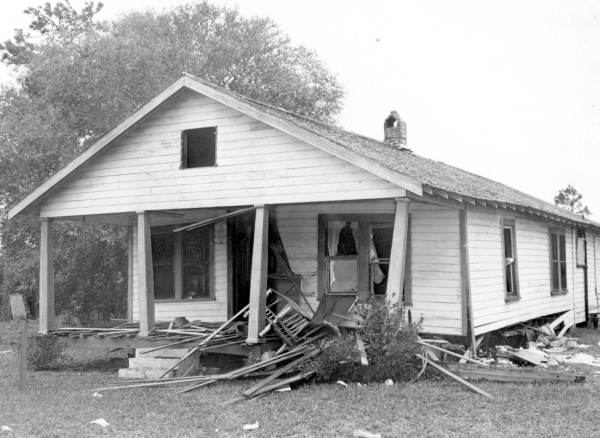
The Black history of Brevard County is older than the county itself. Spanish-era runaway slaves from Georgia and Carolina established communities in north Florida from the 1700s, and free Black settlers were on the Indian River coast by the 1850s. After emancipation, Freedmen’s Bureau-supervised settlements formed at LaGrange, Mims, and around Cocoa. The 20th century brought segregation, civil-rights organizing, the assassination of Harry T. Moore in 1951, and the slow process of school desegregation in the 1960s and 1970s.
Freedmen’s settlements, 1860s-1880s
The Reconstruction era established several distinct Black settlements in what would become Brevard County. The largest were:
- LaGrange, near today’s Mims, a Freedmen’s settlement with church, school, and substantial land ownership by the 1880s
- Spring Hill, a small settlement north of Titusville
- Cocoa’s Black community, organized around what is now the Provost-Robinson neighborhood, dating to the 1880s
- Eau Gallie’s Black community, on the southern side of the town, dating to the 1890s
- Melbourne’s Black community, primarily in what became known as the South Melbourne neighborhood
Land ownership records from the Brevard County Property Appraiser, transcribed in the FAMU Meek-Eaton archives, show Black landowners holding several thousand acres collectively in the county by 1900. Most worked in citrus and pineapple labor, in fishing, in domestic service, and in skilled trades. A smaller number owned independent groves and businesses.
Segregation, 1890s-1960s
Florida’s Jim Crow laws structured public life in Brevard from the 1890s onward. Separate schools, separate hospitals, separate beach access, separate seating in transportation and public accommodations. Voting was severely restricted by poll taxes and white primaries through the 1940s.
The segregated school system was extensive. Brevard operated separate Black schools at LaGrange (Stone School, opened 1898), Cocoa (Monroe High School, opened 1942), Melbourne (Pineapple High School, opened 1936), and several smaller elementary schools across the county. The Black schools were chronically underfunded, per-pupil spending in 1948 ran about 40 percent of the white school average, but produced strong graduates, many of whom went on to FAMU and to broader careers in the segregated professional world.
The Black workforce supplied much of the labor for the citrus and tourism economies. Major employers included the FEC Railway (segregated work crews), the lagoon-coast packing houses, the Patrick AFB civilian labor force, and the major hotels along the Indian River. Tipping points came in the 1930s with the New Deal, in the 1940s with WWII labor demand, and in the 1960s with the space program’s federal anti-discrimination contracting requirements.
The Moore family, 1925-1951
Harry T. Moore was born in Houston, Florida (Suwannee County), on November 18, 1905. He earned his teaching certificate from Florida Memorial College in 1925, married Harriette Vyda Simms in 1926, and accepted a teaching position at the Titusville Colored School in 1925. Moore taught in Brevard County for the next 21 years, eventually serving as principal of Mims Elementary School (the Black elementary school at LaGrange/Mims).
In 1934 Moore organized the Brevard County branch of the NAACP. By the late 1930s he had become Florida state NAACP president. Through the 1940s he led voter registration drives across the state, pushed for equalization of Black teacher salaries (winning a major court victory in 1942), and investigated lynchings and other racial violence.
Moore’s organizing made him a target. In 1946 he was fired from his Brevard County teaching position, ostensibly for budget reasons but openly understood as retaliation for his NAACP work. He continued full-time as state NAACP executive secretary while his wife Harriette continued teaching.
The 1949 Groveland case
The case that defined Moore’s final years was the Groveland Four. In July 1949, four Black men in Lake County (Charles Greenlee, Sammy Shepherd, Walter Irvin, and Ernest Thomas) were accused of raping a white woman. Thomas was killed by a posse before any trial. The other three were tried, convicted on weak evidence, and sentenced to death or long imprisonment.
Moore organized national NAACP attention on the case. Thurgood Marshall, then leading the NAACP Legal Defense Fund, appealed the convictions. In 1951 the US Supreme Court overturned the convictions and ordered new trials.
On November 6, 1951, Lake County Sheriff Willis McCall was transporting Shepherd and Irvin from prison to a pretrial hearing. McCall shot both prisoners on a Lake County back road, claiming they had attempted to escape while handcuffed together. Shepherd died. Irvin survived and testified that McCall had shot them in cold blood. McCall faced no legal consequences. Moore publicly demanded McCall’s suspension and federal investigation.
Christmas Day 1951
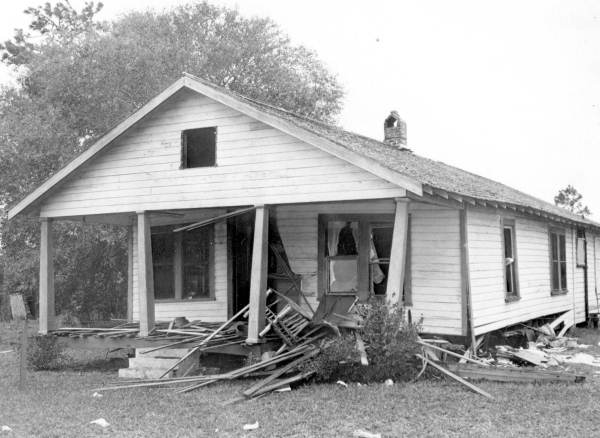
On the night of December 25, 1951, a bomb exploded under the floor of the Moore family home at LaGrange in north Brevard County. Harry T. Moore died en route to the hospital that night. Harriette Moore died of her injuries on January 3, 1952. They had been married 25 years.
The crime was never officially solved during the Moores’ contemporaries’ lifetimes. FBI investigation in 1951-1953 identified four Florida Klansmen as suspects: Earl Brooklyn, Tillman Belvin, Joseph Cox, and Edward Spivey. All four were dead by 1955; Brooklyn and Belvin from natural causes, Cox by suicide. The FBI never brought charges. A 2005-2006 Florida state investigation, conducted by then-Attorney General Charlie Crist, concluded the four men had carried out the bombing.
Moore is generally recognized as the first NAACP official murdered in the modern civil rights era. The Moore home site at 2180 Freedom Avenue in Mims is now the Harry T. and Harriette V. Moore Cultural Complex, with a replica of the home and exhibits documenting the Moores’ work.
School desegregation, 1962-1972
Brevard County did not desegregate its schools in the immediate wake of Brown v. Board of Education (1954). The school district maintained the dual segregated system through the 1950s and early 1960s. Federal pressure under the Civil Rights Act of 1964 and subsequent Office of Education guidelines forced gradual integration.
The first Black students were admitted to formerly all-white Brevard high schools in 1962. Full district-wide integration was completed in stages between 1968 and 1972, with the formerly Black high schools (Monroe in Cocoa, Pineapple in Melbourne) closed or converted to integrated schools during this period.
The integration process produced substantial community disruption. Several formerly all-white neighborhoods saw rapid white flight in the late 1960s and early 1970s. The student bodies and teaching staffs of newly integrated schools had to navigate racial tensions, fights, and adjustments that affected academic outcomes for nearly a decade. Brevard’s experience was less violent than many southern districts but the disruption was real.
Black workforce in the space program
The Civil Rights Act of 1964 and Executive Order 11246 (1965) made federal-contract employers (including all NASA contractors) subject to non-discrimination requirements. The Kennedy Space Center workforce, which had been overwhelmingly white before 1965, integrated through the late 1960s. By 1972, Black employees were approximately 8 percent of the KSC workforce, still below the local population proportion but a meaningful increase from the 1-2 percent of 1960.
The major contractors built specific outreach and apprenticeship programs at the Black colleges, particularly FAMU, in the 1960s-1970s. Several prominent Black NASA officials at KSC and elsewhere trace their careers to those programs.
What survives
The Harry T. and Harriette V. Moore Cultural Complex is the single most important historical site for Brevard’s Black history. The Moore home site, the museum complex, and the surrounding Mims community center are operated by the Brevard County Cultural Council in partnership with the Moore Justice Center.
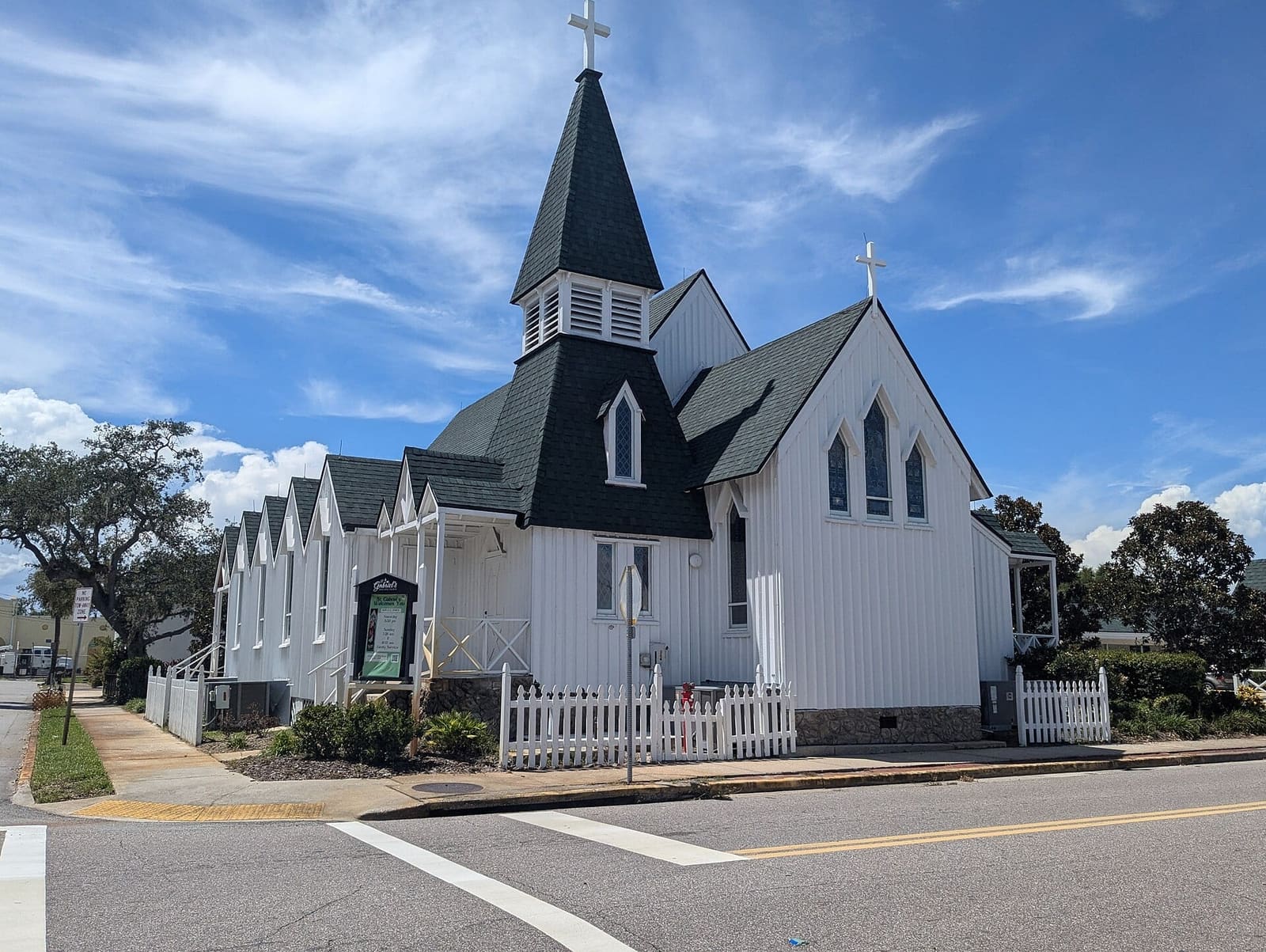
Several historic Black churches in Brevard remain active and serve as repositories of local community memory. Greater Allen AME in Titusville, Greater St. Paul AME in Cocoa, and First Baptist Church in Eau Gallie are among the oldest.
The schools are integrated and the official segregation is in the past, but the residential pattern set by Jim Crow still shapes Brevard’s neighborhoods substantially. The historically Black neighborhoods in Cocoa, Eau Gallie, Melbourne, and Mims remain identifiable, with population demographics, business ownership patterns, and economic conditions that diverge sharply from surrounding white neighborhoods. The county’s measured income gap, educational outcome gap, and homeownership gap between Black and white residents in 2024 census data is consistent with statewide Florida patterns: present and persistent.
What Harry T. Moore was killed for in 1951, Black voting rights, equal pay for Black teachers, anti-lynching enforcement, has been achieved in formal law and undermined in various forms continuously since. The Moore Cultural Complex frames Moore’s work as unfinished. That framing is correct.
Further Reading
As an Amazon Associate we earn from qualifying purchases.